

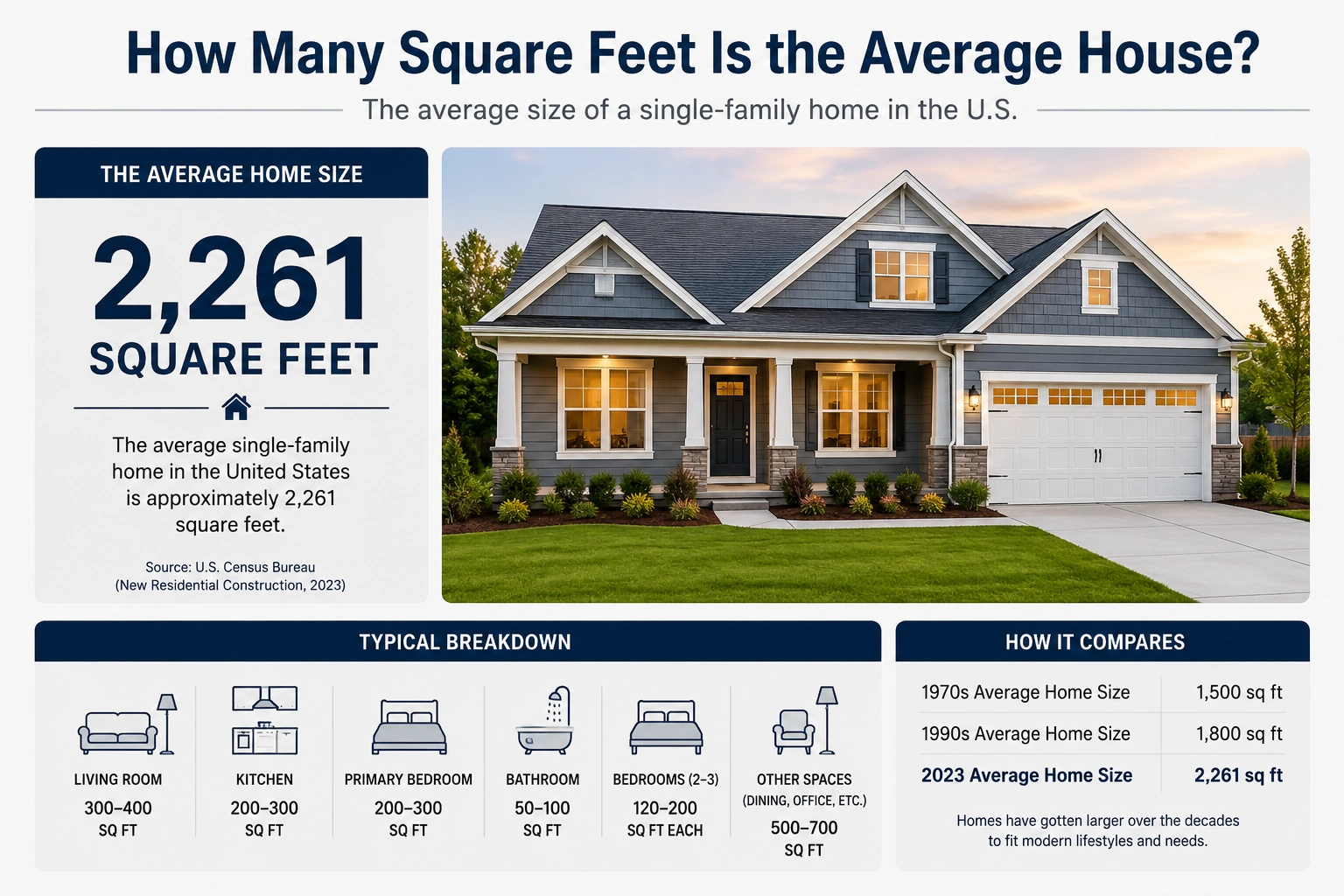
If you are shopping for property, planning construction, or simply curious about housing trends, you may wonder: how many square feet is the average house? House size is one of the biggest factors affecting comfort, property value, energy costs, and lifestyle.
The quick answer is:
Average U.S. house size≈2,200 to 2,500 square feet
So, the average modern American house is typically around 2,200 to 2,500 square feet.
However, house sizes vary depending on:
- Country
- Location
- Budget
- Family size
- Property type
In this guide, you will learn average house square footage, home size trends, room comparisons, and practical insights for choosing the right home size.
Understanding House Square Footage
Before discussing average house sizes, it helps to understand square footage.
What Is Square Footage?
Square footage measures the total usable floor area inside a home.
It is calculated using this formula:
Square Feet=Length×Width
Square footage usually includes:
- Bedrooms
- Living rooms
- Kitchens
- Bathrooms
- Hallways
Depending on local standards, garages and unfinished basements may not count.
Why House Size Matters
House size affects:
- Home price
- Utility bills
- Maintenance costs
- Storage space
- Comfort level
Larger homes provide more living space but also increase expenses.
How Many Square Feet Is the Average House?
The average house size in the United States today is approximately:
2,200 to 2,500 sq ft
This average mainly reflects:
- Single-family suburban homes
Smaller homes and apartments often measure far less.
Historical Growth of Home Sizes
Homes have become much larger over the past several decades.
1950s Average Home Size
≈1,000 sq ft
Modern Average Home Size
≈2,300 sq ft
Modern families often expect:
- Larger kitchens
- More bathrooms
- Open floor plans
- Home offices
- Extra storage
Average House Sizes by Type
Different types of homes vary significantly in size.
Single-Family Homes
Typical single-family homes average:
2,200 to 2,600 sq ft
These homes usually include:
- 3–4 bedrooms
- Multiple bathrooms
- Garages
Apartments and Condos
Apartments are usually smaller.
Typical apartment sizes:
| Apartment Type | Average Size |
|---|---|
| Studio | 400–600 sq ft |
| 1 Bedroom | 600–900 sq ft |
| 2 Bedroom | 900–1,200 sq ft |
Tiny Homes
Tiny homes are intentionally compact.
Most tiny homes measure:
100 to 400 sq ft
These homes prioritize efficiency and lower costs.
Luxury Homes
Luxury properties often exceed:
5,000 sq ft
Large estates may contain:
- Home theaters
- Gyms
- Guest houses
- Multiple garages
Average House Size by Number of Bedrooms
Bedroom count strongly affects total square footage.
| Bedrooms | Average Square Feet |
|---|---|
| 2 Bedroom | 800–1,500 sq ft |
| 3 Bedroom | 1,200–2,500 sq ft |
| 4 Bedroom | 2,000–3,500 sq ft |
Larger families generally require more living space.
How Square Footage Is Calculated
Understanding how square footage works helps avoid confusion.
Standard Formula
The basic calculation is:
Area=Length×Width
Each room’s area is added together for total house square footage.
Finished vs Unfinished Space
Finished spaces usually count toward square footage.
Examples include:
- Bedrooms
- Kitchens
- Living rooms
Unfinished spaces may not count, such as:
- Garages
- Crawl spaces
- Unfinished basements
Real-World Examples of House Sizes
Visual examples help explain square footage better.
Starter Homes
A small starter home may contain:
1,000 to 1,500 sq ft
These homes are popular for:
- Singles
- Couples
- First-time buyers
Family Homes
Family homes commonly range between:
2,000 to 3,000 sq ft
This provides room for:
- Multiple bedrooms
- Storage
- Offices
- Entertainment areas
Mansions
Large mansions often exceed:
10,000 sq ft
These properties may include luxury amenities and expansive layouts.
Average House Size Comparison Chart
Here is a quick comparison of common home sizes.
| Home Type | Average Square Feet |
|---|---|
| Tiny Home | 100–400 sq ft |
| Apartment | 600–1,200 sq ft |
| Starter Home | 1,000–1,500 sq ft |
| Average Family Home | 2,200–2,500 sq ft |
| Luxury Home | 5,000+ sq ft |
This chart helps compare living spaces more easily.
Factors That Affect House Size
Several factors influence home size preferences.
Family Size
Larger families usually require:
- More bedrooms
- Additional bathrooms
- Bigger living areas
Budget
Larger homes cost more to:
- Purchase
- Heat and cool
- Maintain
- Furnish
Budget heavily affects home size decisions.
Location
Urban homes are often smaller because land costs are higher.
Suburban and rural homes usually offer more square footage.
Lifestyle Trends
Modern buyers often prefer:
- Open layouts
- Home offices
- Outdoor living spaces
These features increase average home size.
Common House Measurement Mistakes
Square footage listings can sometimes be misleading.
Including Garages Incorrectly
Garages may not count toward official living space.
Always check listing details carefully.
Ignoring Unfinished Areas
Basements and attics may only count if finished and climate-controlled.
Misreading Property Listings
Some listings advertise total property area rather than indoor living space.
Always verify square footage definitions.
Expert Tips for Choosing the Right House Size
Professionals recommend balancing space with practicality.
Prioritize Layout Over Size
A well-designed smaller home may feel larger than a poorly designed big house.
Consider Maintenance Costs
Larger homes require:
- More cleaning
- Higher utilities
- More repairs
Choose a manageable size.
Plan for Future Needs
Think about:
- Family growth
- Remote work
- Aging in place
- Storage needs
Future planning helps avoid moving too soon.
Real-World Example
Suppose you are comparing two homes:
Home A
1,200 sq ft
Home B
2,400 sq ft
Home B provides twice the living space but may also double:
- Heating costs
- Cleaning time
- Maintenance expenses
This demonstrates why square footage matters when choosing a home.
FAQs
1. How many square feet is the average American house?
The average American house is typically around 2,200–2,500 square feet.
2. Is 2,000 square feet considered a large house?
Yes, 2,000 square feet is considered spacious for many families.
3. What is the average size of a 3-bedroom home?
Most 3-bedroom homes range between 1,200 and 2,500 square feet.
4. Do garages count toward square footage?
Usually, attached garages do not count as finished living space.
5. Why are modern houses larger than older homes?
Modern families often prefer more storage, larger kitchens, home offices, and open layouts.
Conclusion
Understanding how many square feet is the average house helps buyers, homeowners, and builders make better decisions about space, comfort, and costs. Today, the average American home typically measures:
2,200 to 2,500 square feet
However, ideal home size depends on:
- Family needs
- Budget
- Lifestyle
- Location
Whether you prefer a compact starter home or a spacious family house, understanding square footage helps you compare properties and plan more effectively.
Discover More Articles
How Many Feet Are in an Acre of Land? Explained