

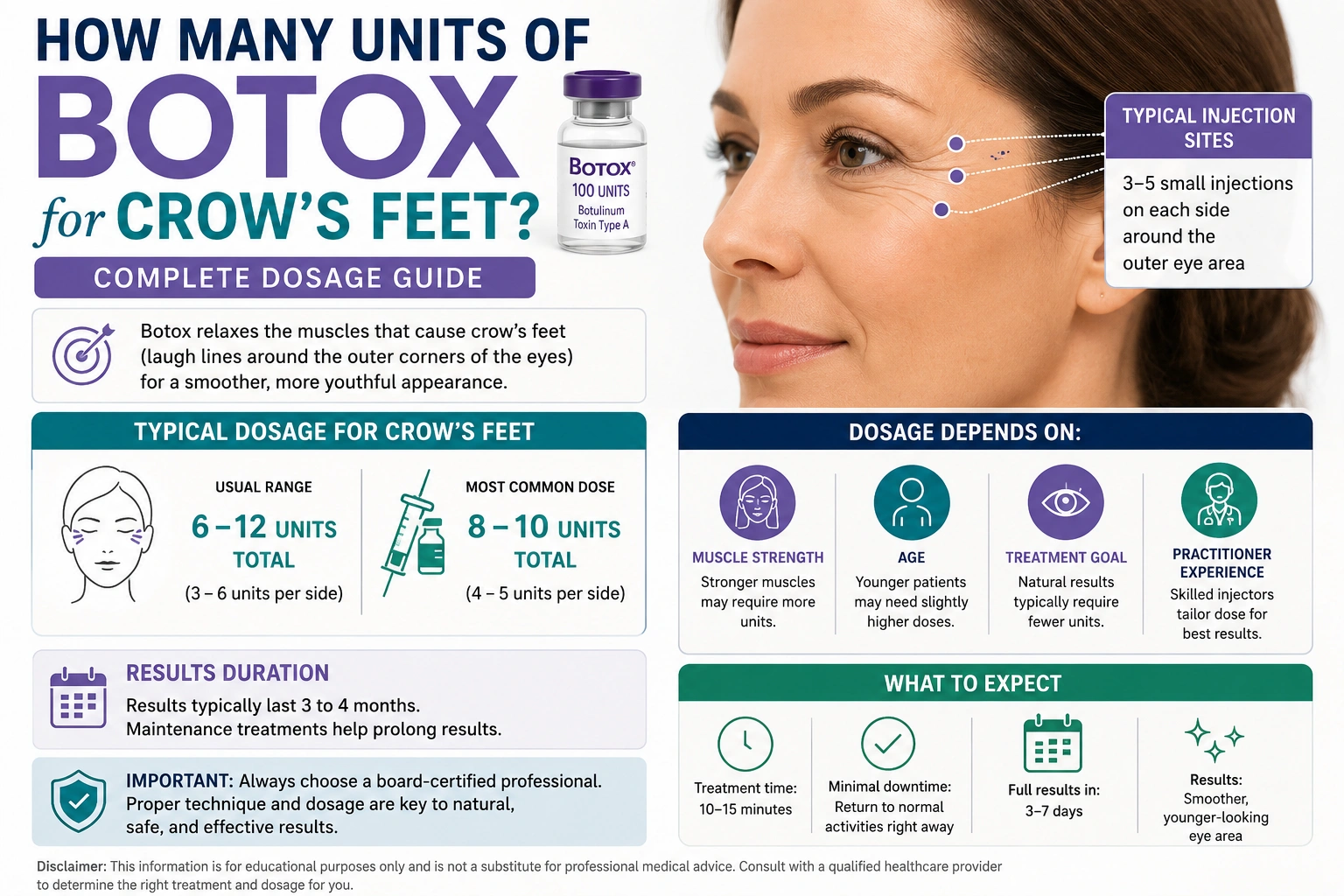
Crow’s feet are the fine lines and wrinkles that develop around the outer corners of the eyes. These lines become more noticeable when smiling, squinting, or making facial expressions. Botox is one of the most commonly used cosmetic treatments for softening the appearance of crow’s feet.
The number of Botox units needed varies from person to person, depending on muscle strength, wrinkle depth, age, and desired results. A qualified medical professional determines the exact dosage during an evaluation.
Quick Answer
For most adults, the typical Botox dosage for crow’s feet is:
- 6 to 15 units per side
- 12 to 30 units total for both eyes
A commonly used treatment plan is:
- 12 units around the right eye
- 12 units around the left eye
Total:
- 24 units of Botox
Actual dosage varies based on individual needs and treatment goals.
What Are Crow’s Feet?
Crow’s feet are dynamic wrinkles that form near the outer corners of the eyes.
Common causes include:
- Aging
- Repeated facial expressions
- Sun exposure
- Smoking
- Natural loss of skin elasticity
These wrinkles often become more visible during smiling or squinting.
Typical Botox Dosage for Crow’s Feet
Most cosmetic providers use Botox in small injections around the muscles responsible for creating crow’s feet.
General dosage ranges:
| Treatment Area | Typical Units |
|---|---|
| One Side | 6–15 Units |
| Both Sides | 12–30 Units |
| Common Treatment | 24 Units |
Some patients require fewer units for subtle improvement, while others benefit from higher amounts for stronger wrinkle reduction.
Factors That Affect Botox Units
Several factors influence the number of units recommended.
Muscle Strength
Stronger facial muscles often require additional units.
Wrinkle Severity
Deeper lines may need more treatment than mild wrinkles.
Age
Older patients sometimes require different dosing strategies than younger adults.
Desired Results
Natural-looking softening and maximum wrinkle reduction may involve different treatment plans.
Previous Botox Treatments
Patients receiving regular treatments may respond differently over time.
How Botox Works Around the Eyes
Botox temporarily relaxes specific facial muscles responsible for dynamic wrinkles.
The treatment can help:
- Smooth fine lines
- Reduce visible crow’s feet
- Create a refreshed appearance
- Prevent deeper wrinkle formation
Results gradually develop during the first several days after treatment.
How Long Results Last
Typical Botox results last:
- Approximately 3 to 4 months
Some individuals may experience:
- Shorter duration
- Longer-lasting results
- Different response rates based on metabolism and muscle activity
Regular maintenance treatments are commonly scheduled throughout the year.
Benefits of Botox for Crow’s Feet
Common reasons patients choose treatment include:
- Reduced eye-area wrinkles
- Smoother skin appearance
- Quick treatment sessions
- Minimal recovery time
- Non-surgical facial rejuvenation
Results can vary between individuals.
FAQs
1. How many units of Botox are typically used for crow’s feet?
Most patients receive between 12 and 30 total units for both eyes.
2. Is 24 units of Botox common for crow’s feet?
Yes. Twenty-four units is a commonly used treatment amount.
3. How long does Botox for crow’s feet last?
Results generally last about 3 to 4 months.
4. Does everyone need the same number of units?
No. Dosage depends on muscle strength, wrinkle severity, and treatment goals.
5. When will results become noticeable?
Many patients begin seeing improvement within several days, with full results often appearing within one to two weeks.
Conclusion
The typical Botox dosage for crow’s feet ranges from 12 to 30 total units, with approximately 24 units being a common treatment amount. The exact number varies according to wrinkle depth, muscle activity, facial anatomy, and desired cosmetic outcomes. Because every patient is different, a qualified healthcare professional determines the most appropriate dosage after evaluating the treatment area and discussing individual goals.
Discover More Articles
How Many Square Feet Is a 2 Car Garage? Complete Size Guide
How Many Square Feet Is a 12×12 Room? Easy Area Calculation Guide
How Many Feet Are in a Nautical Mile? Exact Conversion Guide