
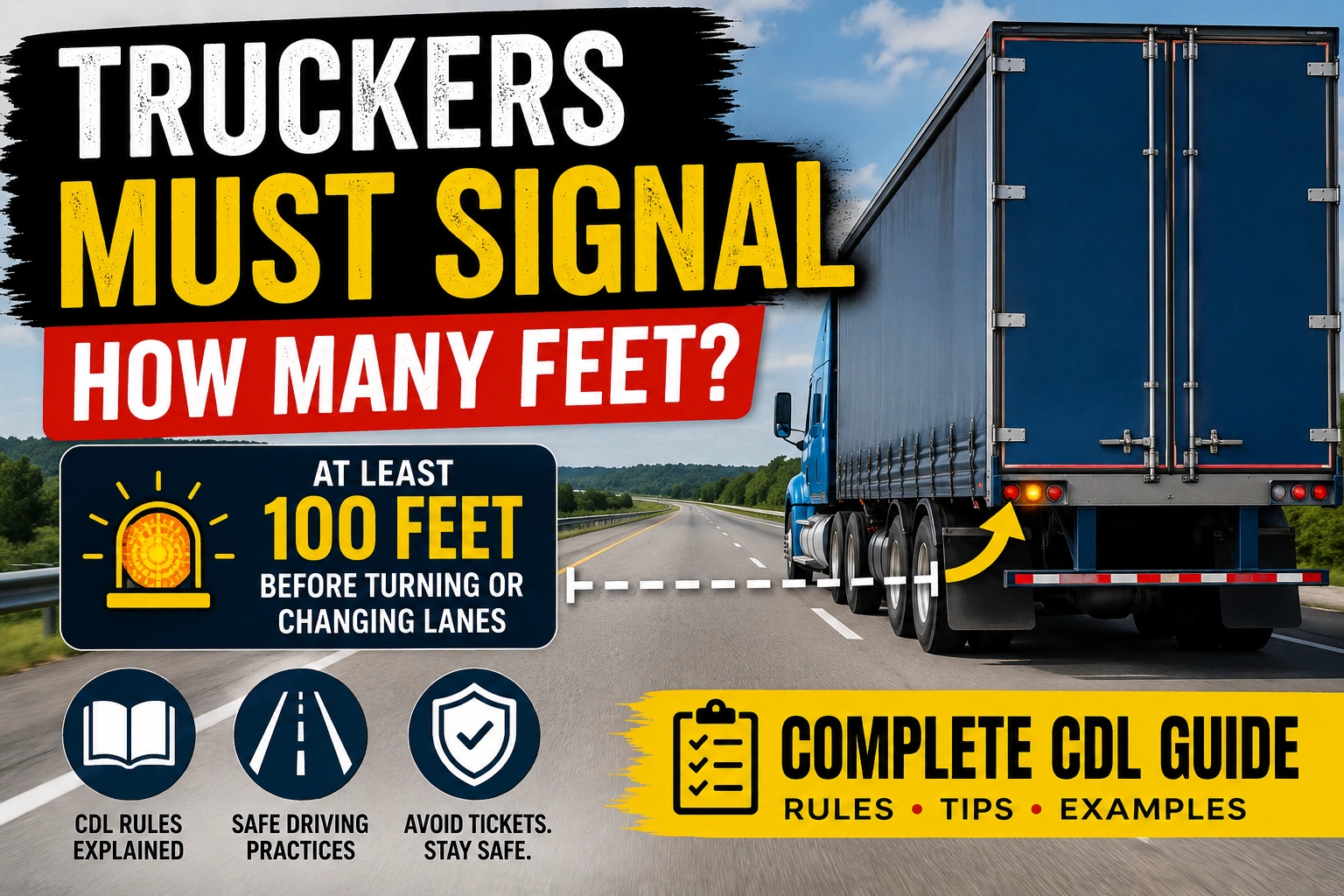
If you’re studying for a Commercial Driver’s License (CDL) exam or simply want to understand trucking safety regulations, you may wonder: truckers must signal how many feet before turning or changing lanes?
The short answer is:
- In many states, truck drivers must signal for at least 100 feet before turning
- Some states require longer signaling distances under specific conditions
A commonly cited rule is:
100 feet minimum signal distance
However, commercial drivers should always follow the traffic laws of the state where they are operating.
Understanding Truck Signaling Requirements
Turn signals are one of the most important safety tools for commercial drivers.
Why Signaling Matters
Truck signals help:
- Warn nearby drivers
- Reduce accidents
- Improve traffic flow
- Communicate driving intentions
Because trucks are larger and require more stopping distance, signaling is especially important.
CDL Safety Standards
Commercial drivers are trained to signal well in advance of any maneuver.
This includes:
- Right turns
- Left turns
- Lane changes
- Highway exits
- Pulling into traffic
State Law Variations
While many states use the 100-foot rule, laws can vary.
Drivers should always consult their local CDL handbook and state traffic regulations.
Truckers Must Signal How Many Feet?
For most driving situations, the commonly accepted requirement is:
100 feet before turning
This allows surrounding traffic enough time to react safely.
Signal Before Turning
Before making a turn, truckers should activate their signal at least:
100 feet in advance
This applies to:
- Left turns
- Right turns
- Intersections
- Driveway entrances
Signal Before Changing Lanes
Commercial driving instructors often recommend signaling several seconds before changing lanes, even when state laws specify a minimum distance.
Why Advance Signaling Is Important
Proper signaling protects both truck drivers and other road users.
Safety Benefits
Advance warning allows motorists to:
- Adjust speed
- Change lanes
- Increase following distance
Preventing Collisions
Many crashes occur because drivers fail to communicate their intentions.
Signals reduce uncertainty.
Improving Traffic Flow
Early signaling helps traffic move more smoothly through intersections and highways.
Signal Requirements for Different Maneuvers
Different driving situations may require different signaling practices.
Turning
The most common legal requirement:
100 feet
Lane Changes
Best practice is to signal continuously until the lane change is completed.
Stopping
Truckers should activate brake lights and warning signals whenever necessary.
Merging
Drivers should signal early enough to allow other motorists to react safely.
CDL Signaling Rules Explained
Commercial driver training emphasizes communication.
Key principles include:
- Signal early
- Keep signals active until maneuver completion
- Cancel signals promptly afterward
- Check mirrors continuously
These habits improve safety and help drivers pass CDL exams.
Common State Signal Distance Requirements
Although regulations vary, many states require:
| Maneuver | Typical Minimum Signal Distance |
|---|---|
| Turning | 100 feet |
| Lane Change | Signal before maneuver |
| Highway Exit | 100+ feet |
| Merging | Adequate advance notice |
Always verify local laws before operating a commercial vehicle.
Real-World Examples for Truck Drivers
City Driving
A truck approaching an intersection should signal well before reaching the turn.
Highway Driving
Early signaling gives faster-moving vehicles time to react.
Backing Into Facilities
Signals and hazard lights help alert nearby traffic and pedestrians.
Delivery Routes
Frequent turns make proper signaling especially important.
Common Signaling Mistakes
Avoid these common errors.
Signaling Too Late
Late signals reduce reaction time for other drivers.
Forgetting to Cancel Signals
Leaving a signal on can confuse surrounding traffic.
Relying Only on Mirrors
Drivers should use signals, mirrors, and visual checks together.
Expert Safety Tips
Professional drivers follow several best practices.
Signal Early
Provide as much warning as possible.
Check Blind Spots
Signals do not replace mirror checks.
Follow State Regulations
Traffic laws differ between jurisdictions.
Practice Defensive Driving
Assume other drivers may not notice your signal immediately.
Real-World Example
Imagine a truck approaching an intersection.
The driver plans to turn right.
Best practice:
Signal at least 100 feet before the turn
This gives nearby motorists time to slow down or adjust position.
FAQs
1. Truckers must signal how many feet before turning?
In many states, at least 100 feet before the turn.
2. Do CDL drivers have different signaling rules?
Commercial drivers generally follow the same traffic laws but are expected to signal early and consistently.
3. Must truckers signal before changing lanes?
Yes. Signals should be activated before any lane change.
4. Is 100 feet the rule in every state?
No. Requirements can vary by state and roadway type.
5. Why is signaling important for trucks?
Because trucks are large vehicles that require more time and distance to maneuver safely.
Conclusion
Understanding truckers must signal how many feet is essential for safe and legal driving. In most situations, commercial drivers should signal:
100 feet before turning
This advance warning helps prevent collisions, improves traffic flow, and allows other drivers to react appropriately. Whether you’re preparing for a CDL exam or operating a commercial vehicle, proper signaling remains one of the most important habits for road safety.
Discover More Articles
How Many Feet Is 102 In? Easy Conversion Guide