
If you’re learning to drive, preparing for a driver’s license exam, or simply reviewing traffic laws, you may be wondering: how many feet do you have to signal before turning?
Using your turn signal is one of the most important habits for safe driving. It communicates your intentions to other drivers, cyclists, and pedestrians, helping reduce confusion and prevent accidents.
While traffic laws can vary slightly depending on where you live, there is a common rule used throughout much of the United States.
The short answer is:
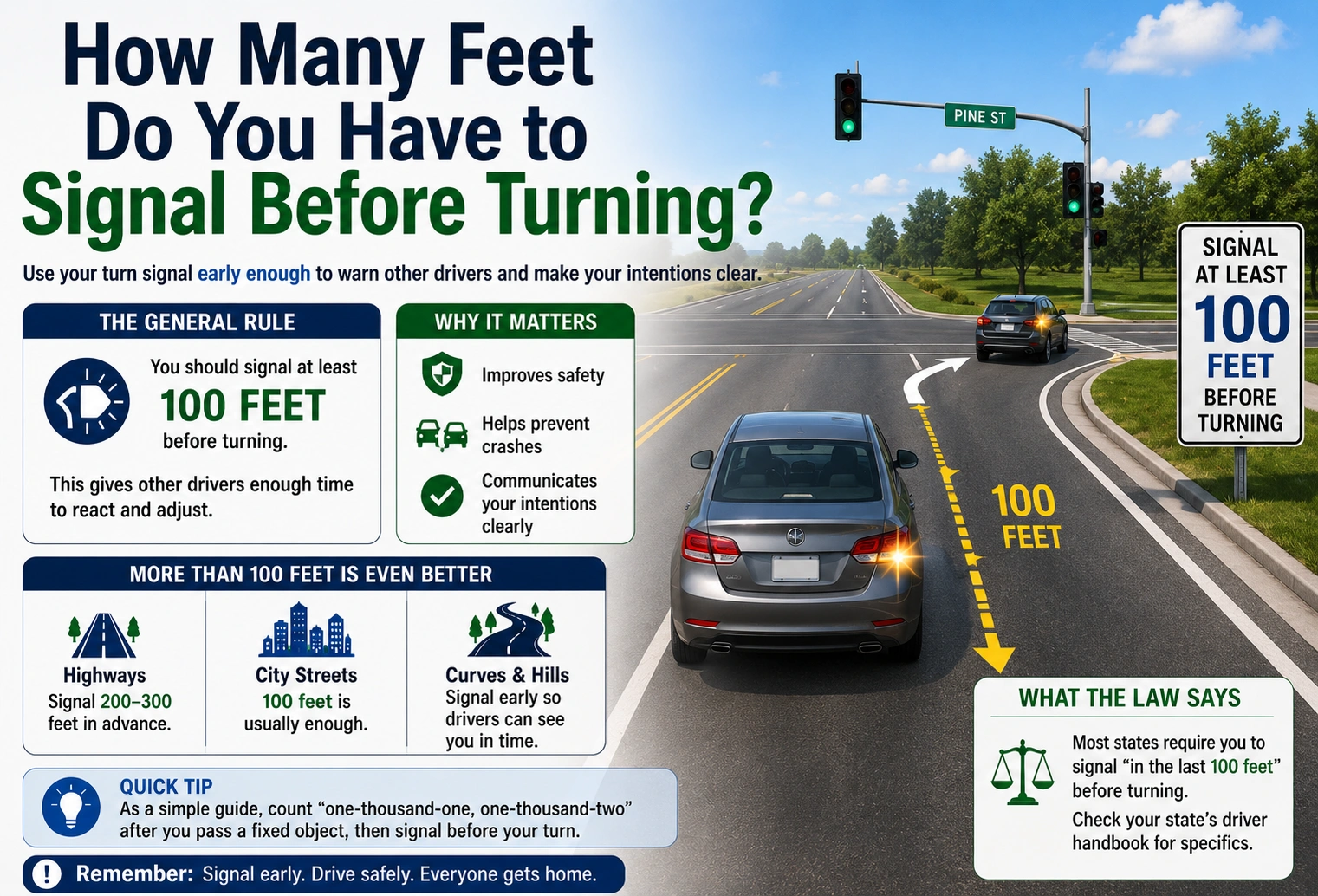
In most U.S. states, you must signal at least 100 feet before making a turn.
However, some states have different requirements, so it’s important to understand both the general rule and local regulations.
This guide explains signaling distances, why they matter, common driving mistakes, and what to expect on a driving test.
Quick Answer
How Many Feet Do You Have to Signal Before Turning?
For most drivers in the United States:
✅ Signal at least 100 feet before turning.
This applies to:
- Left turns
- Right turns
- Entering a driveway
- Leaving a parking area
- Other directional changes
Many state driver’s manuals use the 100-foot rule as the minimum legal signaling distance.
Why Signaling Before Turning Is Important
Turn signals are more than a legal requirement—they’re a key part of safe driving.
Safety Benefits
Proper signaling helps:
- Warn other drivers
- Reduce rear-end collisions
- Improve traffic flow
- Protect pedestrians
- Increase visibility of your intentions
Drivers around you can react more safely when they know what you plan to do.
Legal Requirements
Traffic laws generally require drivers to signal before:
- Turning left
- Turning right
- Changing lanes
- Pulling into traffic
- Leaving a parking space
Failure to signal can result in:
- Traffic citations
- Driving test deductions
- Increased accident risk
How Many Feet Do You Have to Signal Before Turning?
Standard Rule in Most States
The most common legal requirement is:
100 feet before the turn.
This distance gives nearby drivers enough time to:
- Recognize your signal
- Adjust their speed
- Prepare for your movement
In residential areas and city streets, 100 feet is typically sufficient warning.
State-by-State Variations
Although 100 feet is widely used, some states require longer distances.
Examples may include:
- 100 feet minimum
- 200 feet minimum
- 300 feet minimum in certain situations
Always consult your state’s driver’s handbook for exact requirements.
For driver’s education purposes, the safest answer is usually:
Signal at least 100 feet before turning unless local law requires more.
Turn Signal Laws Explained
Traffic laws generally require a signal whenever your movement could affect another road user.
This includes:
- Turning at intersections
- Entering driveways
- Exiting parking lots
- Merging into traffic
- Changing lanes
A signal should remain active until the maneuver begins.
Turning it on too late reduces its effectiveness.
Signaling Distance for Different Driving Situations
Right Turns
Signal:
At least 100 feet before the turn
This gives vehicles behind you time to slow down.
Left Turns
Left turns often involve crossing traffic.
Proper signaling helps:
- Oncoming drivers
- Vehicles behind you
- Pedestrians
Again, signal at least 100 feet before the turn whenever possible.
Lane Changes
Most states require signaling before changing lanes as well.
A common recommendation is:
- Signal several seconds before moving
- Check mirrors
- Check blind spots
- Then change lanes
What Driver’s Tests Usually Teach
Driver education courses commonly emphasize:
The 100-Foot Rule
Students are taught to:
- Signal early
- Maintain the signal
- Complete the turn safely
Mirror-Signal-Maneuver Sequence
Most instructors teach:
- Check mirrors
- Activate turn signal
- Check blind spots
- Complete the maneuver
This sequence improves safety and often appears on driving exams.
Common Mistakes Drivers Make
Even experienced drivers sometimes misuse turn signals.
Signaling Too Late
One of the most common mistakes is activating the signal only moments before turning.
This provides little warning to others.
Forgetting to Signal
Some drivers neglect signaling when roads appear empty.
However, signaling is still important because:
- Pedestrians may be nearby
- Cyclists may be present
- Other vehicles may approach unexpectedly
Turning the Signal Off Too Early
Leaving the signal on until the maneuver begins is generally safest.
Not Signaling Lane Changes
Many accidents occur because drivers change lanes without warning.
Safety Tips for Proper Signaling
Signal Early
Whenever possible:
Signal before braking.
This provides maximum warning.
Be Consistent
Signal every time you:
- Turn
- Merge
- Change lanes
Consistency builds safe driving habits.
Check Blind Spots
A turn signal does not replace checking for traffic.
Always verify that the lane or turn is clear.
Use Signals Even When Traffic Is Light
Good habits improve safety regardless of traffic volume.
Turn Signal Distance Chart
| Driving Action | Recommended Signal Distance |
|---|---|
| Right Turn | 100 feet minimum |
| Left Turn | 100 feet minimum |
| Entering Roadway | 100 feet minimum |
| Exiting Roadway | 100 feet minimum |
| Lane Change | Several seconds before maneuver |
| Highway Exit | Early signaling recommended |
This chart reflects common driving guidelines used across many jurisdictions.
How Far Is 100 Feet?
Many new drivers struggle to visualize 100 feet.
Here are some comparisons:
- About one-third of a football field
- Roughly 8–10 car lengths
- Approximately the length of a large city lot
Understanding this distance can help you signal at the correct time.
Why Early Signaling Prevents Accidents
Research consistently shows that communication reduces driving conflicts.
When drivers signal properly:
- Following vehicles react sooner
- Traffic flows more smoothly
- Pedestrians anticipate movements
- Lane changes become safer
A simple signal can prevent confusion and reduce crash risk.
9. FAQs
1. How many feet do you have to signal before turning?
In most U.S. states, you must signal at least 100 feet before turning.
2. Is signaling required for both left and right turns?
Yes. Traffic laws generally require signaling for both left and right turns.
3. Do you need to signal before changing lanes?
Yes. Most states require signaling before lane changes as well.
4. Can you fail a driving test for not signaling?
Yes. Failure to signal properly is a common reason for point deductions or test failure.
5. Do all states require exactly 100 feet?
No. While many states use the 100-foot rule, some states require longer distances in certain situations.
10. Conclusion
If you’re asking how many feet do you have to signal before turning, the standard answer is at least 100 feet before the turn in most U.S. states. This gives other drivers, cyclists, and pedestrians enough time to understand your intentions and react safely.
Proper signaling is one of the simplest yet most effective driving habits. Whether you’re preparing for a driver’s test, refreshing your knowledge of traffic laws, or improving your defensive driving skills, remembering the 100-foot signaling rule can help keep you and others safer on the road. Always check your local traffic laws, as specific requirements may vary by state or jurisdiction.
Discover More Articles
How Many Feet Is 100 Square Feet? Understanding the Difference
How Many Stories Is 40 Feet? Building Height Conversion Guide
How Many Feet Long Is a Basketball Court? Official Dimensions