
If you’re wondering how many feet do you skydive from, the most common answer is:
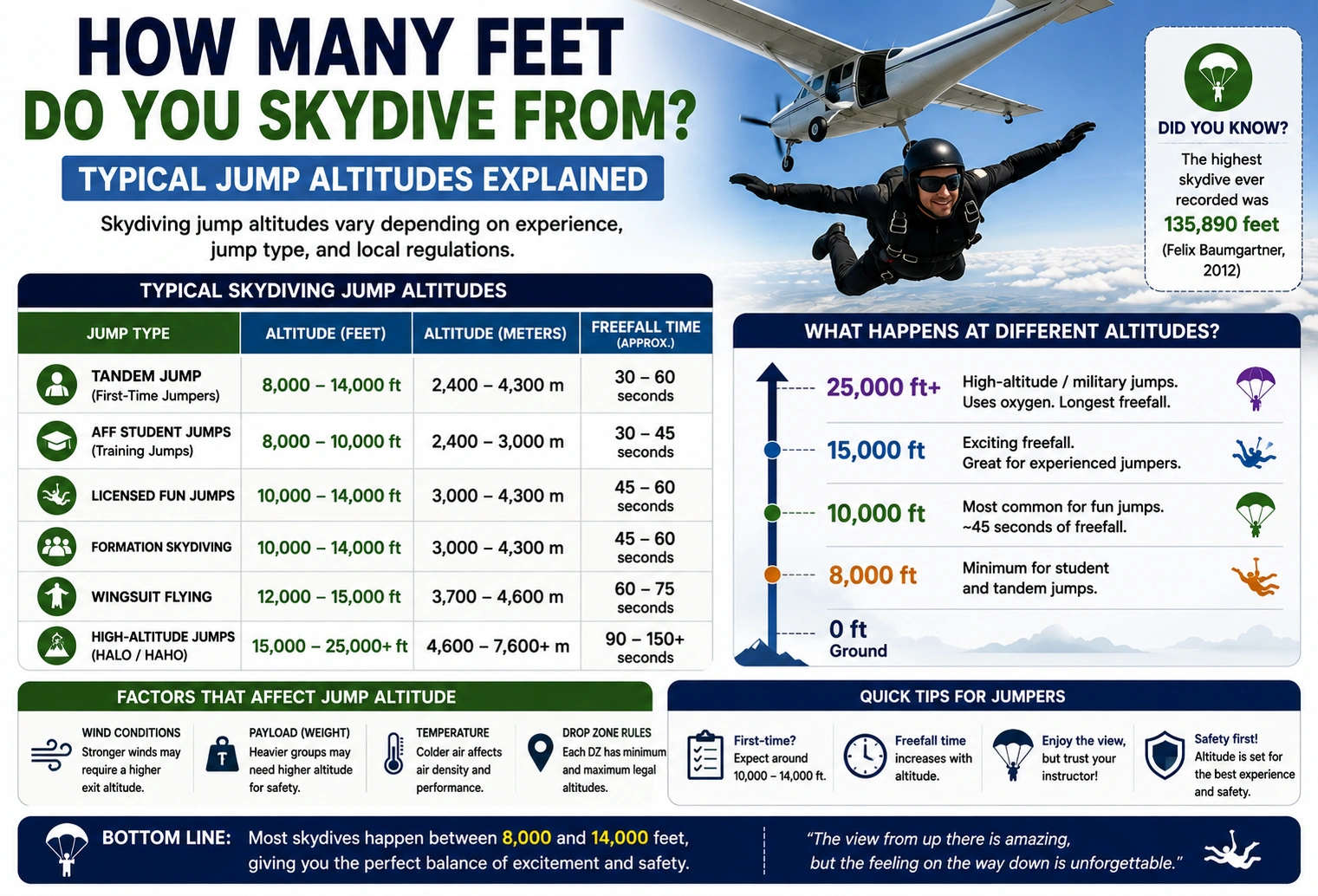
Most recreational skydives begin from approximately 10,000 to 14,000 feet above ground level (AGL).
Many first-time tandem skydives are performed from around 13,000 to 14,000 feet, providing a long freefall before the parachute is deployed.
Quick Answer
| Type of Skydive | Typical Exit Altitude |
|---|---|
| Tandem Skydive | 13,000–14,000 ft |
| Solo Sport Skydive | 10,000–14,000 ft |
| Training Jumps | 3,500–5,500 ft (varies by program) |
| High-Altitude Skydive | 18,000 ft or higher |
Most recreational skydivers jump from around 13,000–14,000 feet.
Standard Skydiving Altitudes
Commercial skydiving centers typically operate within the following altitude range:
- 10,000 feet
- 12,000 feet
- 13,000 feet
- 14,000 feet
The exact exit altitude depends on:
- Aircraft performance
- Weather conditions
- Air traffic regulations
- Drop zone procedures
Higher jump altitudes generally provide longer freefall experiences.
Tandem vs Solo Jumps
Tandem Skydives
Most first-time skydivers choose a tandem jump.
Typical exit altitude:
13,000–14,000 feet
This allows beginners to experience a longer freefall while securely attached to an experienced instructor.
Solo Skydives
Licensed skydivers often jump from similar altitudes.
Depending on the training program and aircraft, solo jumps commonly occur between:
10,000 and 14,000 feet
High-Altitude Skydives
Some specialized jumps begin at much higher altitudes.
Examples include:
- 18,000 feet
- 20,000 feet
- 25,000 feet or higher
These jumps often require supplemental oxygen because of the reduced oxygen levels at higher elevations.
High-altitude skydives are generally reserved for experienced skydivers using specialized equipment.
How Altitude Affects Freefall Time
The higher you exit the aircraft, the longer your freefall lasts.
Typical examples include:
| Exit Altitude | Approximate Freefall Time |
| 10,000 ft | 30–35 seconds |
| 13,000 ft | 50–60 seconds |
| 14,000 ft | Around 60 seconds |
| 18,000 ft | 90 seconds or more |
Actual freefall time varies depending on body position, exit altitude, weather conditions, and when the parachute is deployed.
Real-World Examples
The altitude you jump from directly affects the length of your freefall and overall skydiving experience.
First-Time Tandem Skydive
Many first-time tandem skydives begin from 13,000 to 14,000 feet above ground level. This typically provides close to a minute of freefall before the instructor deploys the parachute.
Licensed Sport Skydiver
Experienced skydivers often jump from 10,000 to 14,000 feet, depending on the aircraft, weather, and the type of jump they are performing.
High-Altitude Adventure Jump
Some specialty skydives begin from 18,000 feet or higher. These jumps offer longer freefall times but generally require supplemental oxygen and additional planning.
What Happens During a Typical Skydive?
A standard recreational skydive usually follows these steps:
- Board the aircraft and climb to the planned altitude.
- Exit the aircraft at the designated height.
- Experience freefall until parachute deployment.
- Fly the parachute (canopy) to the landing area.
- Land under the guidance of your instructor or according to your training.
The exact timing varies depending on the jump altitude and conditions.
Safety Considerations
Modern skydiving places a strong emphasis on safety through equipment, training, and operating procedures.
Important safety practices include:
- Using equipment that is regularly inspected and maintained.
- Receiving a thorough pre-jump briefing.
- Wearing a properly fitted harness and parachute system.
- Following instructions from certified instructors.
- Jumping only when weather conditions are suitable.
Commercial drop zones also use backup safety systems, including reserve parachutes and automatic activation devices (AADs), as required by applicable regulations.
Common Misconceptions
Every Skydive Starts at 14,000 Feet
Not necessarily.
Although 13,000–14,000 feet is common for tandem skydives, some jumps begin lower or higher depending on the aircraft, training program, and type of skydive.
Higher Always Means Better
A higher exit altitude generally provides more freefall time, but it also increases flight time, operating costs, and, at very high altitudes, may require supplemental oxygen.
Freefall Lasts Several Minutes
Most recreational skydives involve roughly 30 to 60 seconds of freefall. Only specialized high-altitude jumps typically produce significantly longer freefall times.
Frequently Asked Questions
How many feet do you skydive from?
Most recreational skydives begin from 10,000 to 14,000 feet, while tandem skydives commonly start from 13,000–14,000 feet above ground level.
How long is freefall from 14,000 feet?
A typical skydive from 14,000 feet provides about 60 seconds of freefall, although the exact time varies with exit altitude, body position, and parachute deployment altitude.
Do beginners jump from the same height as experienced skydivers?
Many first-time tandem skydives use the same general altitude range as experienced recreational skydivers. Training jumps in some instructional programs may begin from lower altitudes depending on the course and local procedures.
What is considered a high-altitude skydive?
Skydives beginning around 18,000 feet or higher are generally considered high-altitude jumps and often require supplemental oxygen and specialized procedures.
At what altitude is the parachute opened?
For recreational skydives, parachutes are commonly deployed several thousand feet above the ground. The exact deployment altitude depends on the type of jump, training, and safety procedures followed by the drop zone.
Conclusion
If you’re wondering how many feet do you skydive from, most recreational jumps begin between 10,000 and 14,000 feet, with 13,000–14,000 feet being especially common for tandem skydives. Higher jump altitudes provide longer freefall experiences, while specialized jumps from 18,000 feet or more require additional equipment and safety procedures.
Whether you’re preparing for your first tandem jump or simply learning about the sport, understanding typical skydiving altitudes helps set realistic expectations for freefall time, parachute flight, and the overall experience.
Discover More Articles
How Many Feet Long Is a Ford F-150? Complete Length Guide