

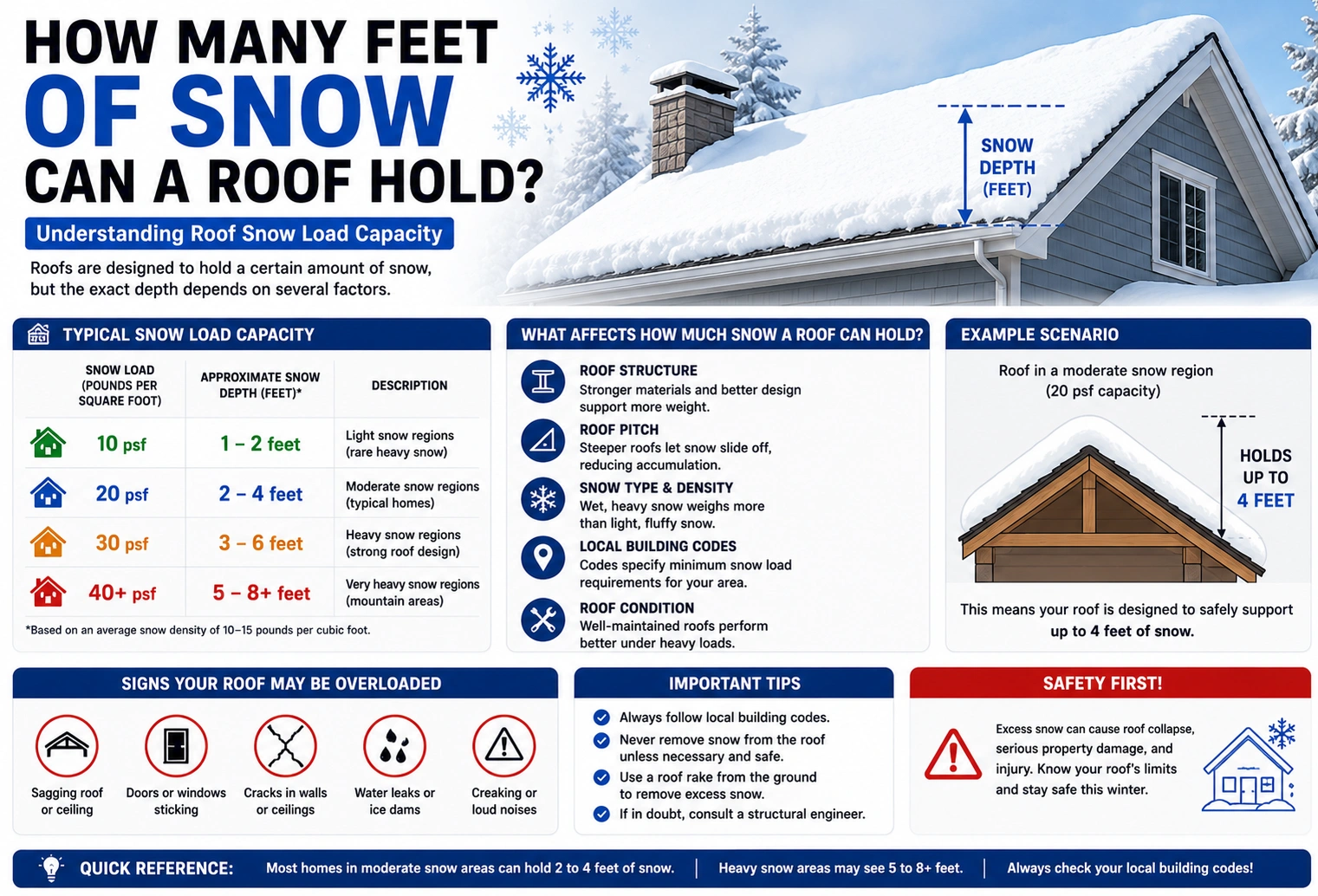
If you live in an area with harsh winters, you may wonder how many feet of snow can a roof hold before it becomes unsafe. While it might seem like the answer depends only on snow depth, the real concern is snow weight, not just how many feet have accumulated.
In general, most modern residential roofs are designed to support 20–40 pounds per square foot (psf) of snow load, although some roofs in heavy snow regions are engineered to withstand much higher loads.
Depending on whether the snow is light and fluffy or heavy and wet, just 1 foot of wet snow can weigh as much as 3 feet of dry snow. That’s why two roofs with the same amount of snow may experience very different levels of stress.
This guide explains roof snow loads, how snow weight is calculated, warning signs of overload, and when it’s time to remove snow safely.
Quick Answer
| Snow Type | Approximate Weight per Cubic Foot |
|---|---|
| Fresh, dry snow | 5–10 lbs |
| Packed snow | 15–20 lbs |
| Wet snow | 20–30 lbs |
| Ice | 57 lbs |
General Rule:
- 1–2 feet of light, dry snow is usually not a problem for most modern roofs.
- 1 foot of heavy, wet snow can create significant stress.
- Roof safety depends on weight, roof design, and local building codes—not snow depth alone.
Why There’s No Single Answer
No two roofs are exactly alike. A roof’s ability to hold snow depends on several factors, including:
- Structural design
- Building age
- Roof pitch
- Construction materials
- Local building codes
- Snow density
- Existing roof condition
For this reason, there’s no universal number of feet of snow that is safe for every home.
Understanding Roof Snow Load
A snow load is the amount of weight from accumulated snow that a roof is designed to support.
Engineers measure this in pounds per square foot (psf).
Typical residential roof snow loads include:
| Roof Type | Typical Design Snow Load |
|---|---|
| Mild-climate homes | 20 psf |
| Standard residential homes | 20–40 psf |
| Heavy snow regions | 40–70+ psf |
| Commercial buildings | Varies by design |
Building codes differ depending on climate, so homes in snowy regions are usually built with stronger roof structures.
How Snow Weight Changes
Snow doesn’t always weigh the same.
Fresh, Dry Snow
- Very light
- Contains lots of air
- Weighs about 5–10 pounds per cubic foot
Packed Snow
- Denser after settling
- Weighs 15–20 pounds per cubic foot
Wet Snow
- Contains much more water
- Weighs 20–30 pounds per cubic foot
- Places much greater stress on roofs
Ice
Ice is much heavier than snow and often forms after melting and refreezing.
It weighs approximately 57 pounds per cubic foot.
Average Roof Snow Capacity
Most residential roofs can safely handle normal winter snowfall.
Here’s a general guide:
| Snow Depth | Dry Snow | Wet Snow |
|---|---|---|
| 6 inches | Usually safe | Usually safe |
| 1 foot | Usually safe | May require monitoring |
| 2 feet | Monitor conditions | Consider snow removal |
| 3 feet | Heavy load | Remove immediately if safe |
Remember, these are general estimates. A structural engineer can provide a precise assessment for your roof.
Factors That Affect Snow Load
Several factors influence how much snow your roof can safely support.
Roof Pitch
Steeper roofs naturally shed snow more easily than flat roofs.
Roof Material
Metal roofs shed snow faster than asphalt shingles.
Roof Age
Older roofs may have weakened framing or hidden structural damage.
Snow Moisture Content
Wet snow weighs much more than fresh powder.
Ice Dams
Ice buildup traps additional snow and water, increasing the total load.
Multiple Snowstorms
Several storms without melting can create dangerous accumulations.
Warning Signs Your Roof Has Too Much Snow
Watch for these signs during winter:
- Sagging roof sections
- Cracks in walls or ceilings
- Doors and windows sticking
- Unusual creaking or popping sounds
- Interior water leaks
- Visible roof deformation
If you notice any of these signs, reduce the load if it can be done safely and contact a roofing professional or structural engineer.
When Should You Remove Snow?
Many roofing experts recommend removing snow when:
- Heavy, wet snow exceeds 12 inches
- Total snow depth approaches 2 feet or more
- Ice dams begin forming
- Your roof already has structural concerns
Always prioritize safety. Never climb onto an icy roof without proper equipment and training.
How to Estimate Snow Weight
A simple estimate is:
Snow Weight = Snow Depth × Snow Density
For example:
A roof has 18 inches (1.5 feet) of wet snow.
If wet snow weighs 25 pounds per cubic foot:
1.5 × 25 = 37.5 pounds per square foot
This load approaches the design limit of many residential roofs.
Roof Types and Snow Capacity
Different roof styles handle snow differently.
| Roof Style | Snow Performance |
|---|---|
| Steep gable roof | Excellent snow shedding |
| Hip roof | Good performance |
| Metal roof | Excellent for snow removal |
| Flat roof | Highest snow accumulation |
| Low-slope roof | Requires regular monitoring |
Flat and low-slope roofs generally need more frequent snow removal because snow doesn’t slide off easily.
Safety Tips
Follow these best practices during winter:
- Remove snow using a roof rake from the ground whenever possible.
- Avoid climbing onto icy roofs.
- Keep gutters clear before winter begins.
- Watch for ice dam formation.
- Schedule roof inspections if your home is older.
- Know your local building code requirements for snow loads.
Common Mistakes
Judging by Depth Alone
A foot of wet snow can weigh much more than two feet of dry powder.
Ignoring Ice
Ice adds significant weight and can block proper drainage.
Delaying Snow Removal
Allowing multiple storms to accumulate increases the risk of structural damage.
Walking on Snow-Covered Roofs
This is one of the most common causes of winter roofing accidents.
Expert Tips
- Install snow guards on metal roofs where appropriate.
- Trim overhanging tree branches to reduce debris and uneven snow loads.
- Inspect your attic for leaks after heavy snowfalls.
- Address roof damage before winter begins.
- Consider professional snow removal for large accumulations.
Quick Snow Weight Reference
| Snow Condition | Approximate Weight |
|---|---|
| 1 ft dry snow | 5–10 psf |
| 1 ft packed snow | 15–20 psf |
| 1 ft wet snow | 20–30 psf |
| 2 ft wet snow | 40–60 psf |
9. Frequently Asked Questions
1. How many feet of snow can a roof hold?
Most residential roofs can safely support 1–2 feet of light, dry snow, but 1 foot of heavy, wet snow may approach the design limits of some roofs. The critical factor is snow weight, not depth.
2. How much weight can a residential roof hold?
Many modern residential roofs are designed for 20–40 pounds per square foot (psf), though requirements vary by location and building code.
3. Is wet snow more dangerous than dry snow?
Yes. Wet snow contains much more water and can weigh two to four times more than fresh, dry snow.
4. When should I remove snow from my roof?
Consider removing snow when heavy wet snow exceeds about 12 inches, total accumulation reaches 2 feet or more, or you notice signs of structural stress.
5. Can too much snow cause a roof to collapse?
Yes. Excessive snow and ice can exceed a roof’s design load, potentially leading to structural damage or roof collapse if not addressed.
10. Conclusion
If you’re wondering how many feet of snow can a roof hold, there’s no single answer because roof safety depends on snow weight, roof design, structural condition, and local building codes. Most residential roofs are built to handle 20–40 pounds per square foot, but heavy, wet snow can reach that limit much faster than light, fluffy snow.
Instead of focusing only on snow depth, monitor the type of snow, check for warning signs such as sagging or leaks, and remove excessive accumulation safely when needed. Understanding your roof’s snow load capacity and practicing regular winter maintenance can help protect your home and reduce the risk of costly damage.
Discover More Articles
How Many Feet Is 157 In? Exact Conversion Guide