
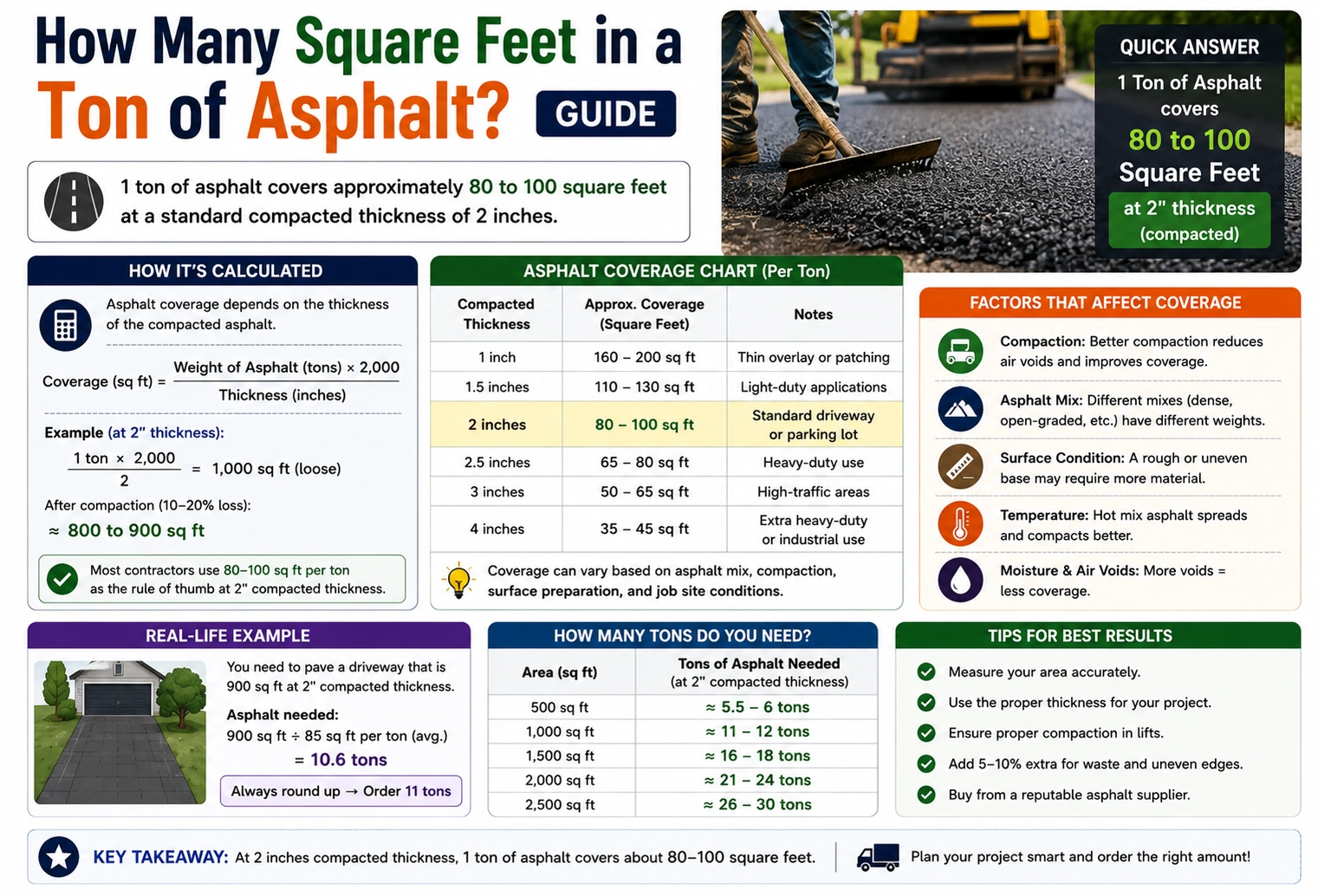
If you’re wondering how many square feet in a ton of asphalt, the answer depends on the thickness of the asphalt layer. As the pavement gets thicker, one ton of asphalt covers fewer square feet.
A common rule of thumb is:
- 1 ton of asphalt covers approximately 80 square feet at a compacted thickness of 2 inches.
Here are typical coverage estimates:
| Compacted Thickness | Coverage per Ton |
|---|---|
| 1 inch | About 160 sq ft |
| 1.5 inches | About 110 sq ft |
| 2 inches | About 80 sq ft |
| 3 inches | About 53 sq ft |
| 4 inches | About 40 sq ft |
These values are estimates and may vary slightly depending on asphalt mix design, density, and compaction.
Quick Answer
| Asphalt Thickness | Approximate Coverage per Ton |
|---|---|
| 1 inch | 160 sq ft |
| 2 inches | 80 sq ft |
| 3 inches | 53 sq ft |
| 4 inches | 40 sq ft |
Answer: A ton of asphalt typically covers about 80 square feet at a 2-inch compacted thickness.
What Determines Asphalt Coverage?
Several factors influence how much area one ton of asphalt will cover:
- Pavement thickness
- Asphalt density
- Type of asphalt mix
- Amount of compaction
- Surface preparation
- Base conditions
The most significant factor is thickness. Doubling the thickness roughly cuts the coverage area in half.
Formula for Estimating Asphalt Coverage
While contractors often use specialized paving calculators, understanding the relationship between area and thickness is helpful when estimating material needs.
A=lw
A=6×4=24
4 rows by 6 columns = 24 square units.
w
w
l
l24 square unitsw = 6l = 4
For example, if your driveway measures 800 square feet and you plan to install a 2-inch layer of asphalt:
- Coverage per ton ≈ 80 square feet
- 800 ÷ 80 = 10 tons of asphalt
Always add a small allowance for waste and uneven surfaces.
Asphalt Coverage by Thickness
The following estimates assume properly compacted hot mix asphalt.
| Thickness | Coverage per Ton |
|---|---|
| 1 inch | 160 sq ft |
| 1.5 inches | 110 sq ft |
| 2 inches | 80 sq ft |
| 2.5 inches | 64 sq ft |
| 3 inches | 53 sq ft |
| 4 inches | 40 sq ft |
These values are commonly used for estimating residential and commercial paving projects.
Asphalt Coverage Chart
| Project Size | Tons Needed (2″ Thickness) |
|---|---|
| 160 sq ft | 2 tons |
| 320 sq ft | 4 tons |
| 480 sq ft | 6 tons |
| 640 sq ft | 8 tons |
| 800 sq ft | 10 tons |
| 1,000 sq ft | 12.5 tons |
| 1,600 sq ft | 20 tons |
| 2,000 sq ft | 25 tons |
This chart provides a quick estimate for projects using a standard 2-inch compacted asphalt layer.
Real-World Examples
Residential Driveway
A driveway measures 640 square feet.
At a 2-inch thickness:
640 ÷ 80 = 8 tons of asphalt
Parking Area
A parking pad is 1,600 square feet.
At a 2-inch thickness:
1,600 ÷ 80 = 20 tons
Private Road
A small access road measures 2,000 square feet.
At a 3-inch thickness:
2,000 ÷ 53 ≈ 38 tons of asphalt
Factors That Affect Asphalt Coverage
Actual coverage can vary due to:
Asphalt Mix Design
Different mixes have slightly different densities, affecting the total area covered.
Compaction
Fresh asphalt is laid thicker than its final compacted depth. Proper compaction is essential for durability and accurate coverage.
Surface Conditions
Uneven or damaged bases may require more asphalt than a smooth, well-prepared surface.
Waste
Material lost during transport, handling, and installation can slightly increase the amount required.
Why Thickness Matters
The correct asphalt thickness depends on how the surface will be used.
Typical recommendations include:
| Application | Typical Thickness |
|---|---|
| Walkways | 1.5–2 inches |
| Residential driveways | 2–3 inches |
| Commercial parking lots | 3–4 inches |
| Heavy truck areas | 4–6 inches |
Choosing the right thickness improves durability and extends pavement life.
Common Mistakes
Ignoring Asphalt Thickness
Coverage estimates are only accurate when the intended compacted thickness is known.
Forgetting Compaction
Fresh asphalt compresses during installation, so contractors account for compaction when calculating material quantities.
Not Adding Extra Material
Ordering exactly the calculated amount may leave you short due to waste or uneven grading.
Estimating from Dimensions Alone
Always calculate the total square footage of the project before estimating asphalt tonnage.
Expert Tips
- Measure the project area carefully before ordering.
- Confirm the required pavement thickness with your contractor.
- Add 5–10% for waste and irregular surfaces.
- Use a professional asphalt calculator for large commercial projects.
- Purchase slightly more material than the minimum estimate to avoid delays.
Quick Reference Table
| Thickness | Coverage per Ton |
|---|---|
| 1 inch | 160 sq ft |
| 2 inches | 80 sq ft |
| 3 inches | 53 sq ft |
| 4 inches | 40 sq ft |
9. Frequently Asked Questions
1. How many square feet does one ton of asphalt cover?
At a 2-inch compacted thickness, one ton of asphalt covers approximately 80 square feet.
2. How much asphalt is needed for an 800-square-foot driveway?
At 2 inches thick, you’ll need approximately 10 tons of asphalt.
3. Does asphalt thickness affect coverage?
Yes. Thicker asphalt covers fewer square feet per ton because more material is required.
4. Why do contractors order extra asphalt?
Extra material helps account for waste, compaction, uneven surfaces, and minor measurement differences.
5. Can coverage vary by asphalt type?
Yes. Different asphalt mixes and densities can slightly change the coverage per ton, so consult your supplier for project-specific estimates.
10. Conclusion
If you’re asking how many square feet in a ton of asphalt, the answer depends on the thickness of the finished pavement. As a general guideline, one ton of asphalt covers about 80 square feet at a 2-inch compacted thickness. Thinner layers cover more area, while thicker installations require more material per square foot.
Understanding these coverage estimates helps homeowners and contractors plan paving projects, estimate material costs, and reduce waste. By measuring the total project area, selecting the correct pavement thickness, and allowing for compaction and waste, you can accurately determine how many tons of asphalt your driveway, parking lot, or roadway will require.
Discover More Articles
How Many Acres Is 24,000 Square Feet? Guide