
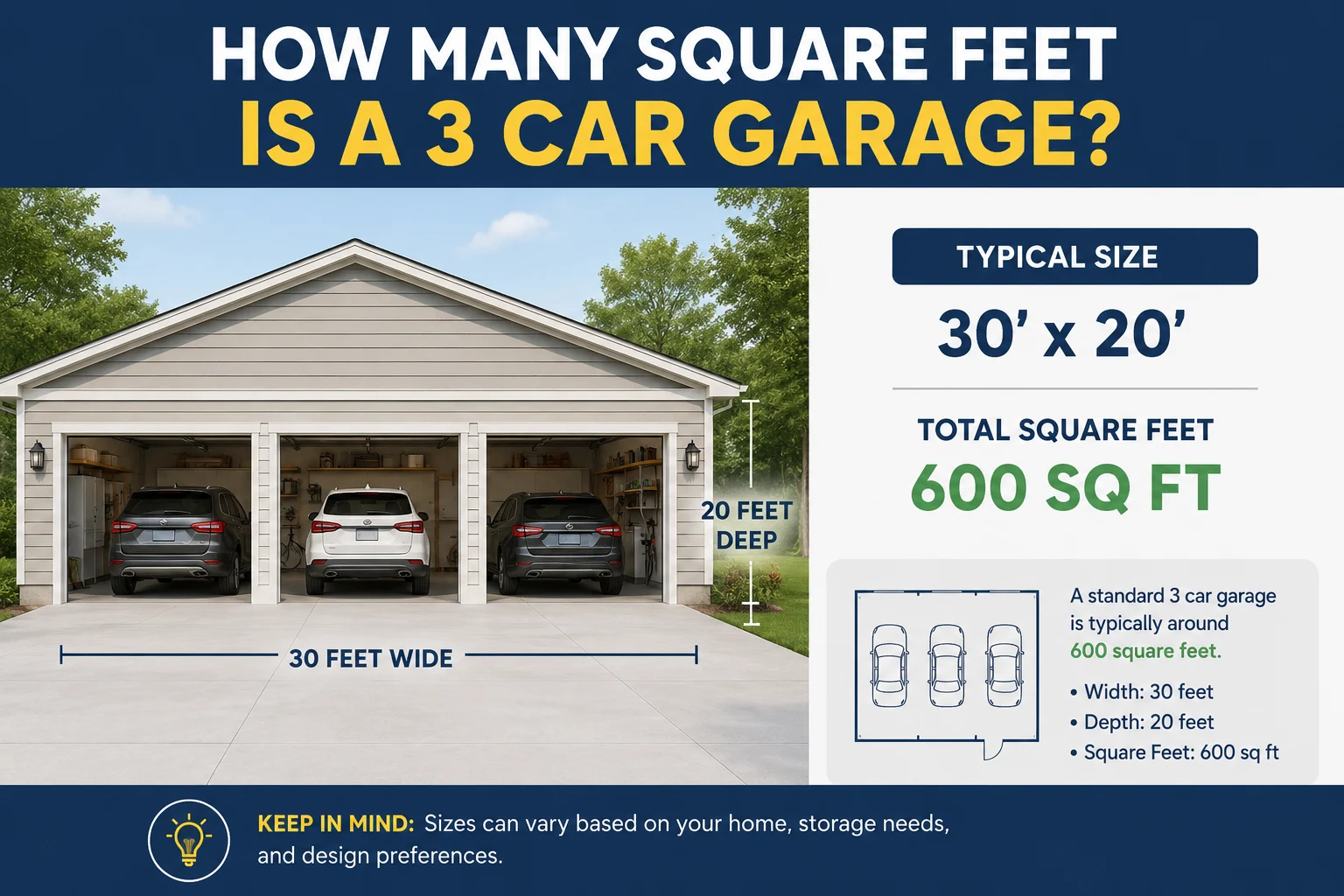
If you are planning a new home, remodeling your property, or simply curious about garage sizing, you may be wondering: how many square feet is a 3 car garage?
The answer depends on the layout, vehicle sizes, and extra storage needs. However, most standard 3-car garages range between 576 and 864 square feet. Some oversized garages can exceed 1,000 square feet.
Understanding garage dimensions is important because modern vehicles are larger than ever. Many homeowners also use their garage for storage, workshops, tools, bicycles, lawn equipment, and more.
In this guide, you will learn:
- Standard 3-car garage dimensions
- Average square footage ranges
- Layout options
- Storage considerations
- Common planning mistakes
- Expert sizing tips
By the end, you will know exactly how much space a 3-car garage typically requires.
What Is the Average Size of a 3 Car Garage?
A standard 3-car garage usually measures between:
| Garage Type | Width | Depth | Approx. Square Feet |
|---|---|---|---|
| Compact 3-Car Garage | 30 ft | 20 ft | 600 sq ft |
| Standard 3-Car Garage | 36 ft | 24 ft | 864 sq ft |
| Oversized 3-Car Garage | 40 ft | 30 ft | 1,200 sq ft |
Most homeowners choose a garage between 32 and 36 feet wide and 22 to 24 feet deep.
Typical Width and Depth
The average parking space for one vehicle requires:
- 10 to 12 feet of width
- 20 to 24 feet of depth
For three vehicles, garages are commonly designed with:
- 30–36 feet width
- 20–24 feet depth
This gives drivers enough room to:
- Open doors comfortably
- Walk between vehicles
- Add storage cabinets
- Move tools and equipment safely
Standard Square Footage Range
Here is the most common square footage breakdown:
- Small 3-car garage: 576–720 sq ft
- Standard 3-car garage: 720–864 sq ft
- Large or luxury garage: 900–1,200+ sq ft
The exact square footage depends on whether the garage includes:
- Storage areas
- Workbenches
- Utility space
- Oversized trucks or SUVs
- Extra ceiling height
Common 3 Car Garage Dimensions
There is no single universal garage size. Builders often customize dimensions based on the property and homeowner needs.
Standard 3 Car Garage
A standard side-by-side 3-car garage typically measures:
- 36 feet wide
- 24 feet deep
This equals:
36×24=864
So, a standard 3-car garage is often about 864 square feet.
This size works well for:
- Three average-sized vehicles
- Basic storage shelves
- Lawn equipment
- Bikes and tools
Oversized 3 Car Garage
Many homeowners prefer extra room for:
- Pickup trucks
- SUVs
- Boats
- Home gyms
- Workshops
Oversized garages may measure:
- 40 x 30 feet
- 42 x 28 feet
- 38 x 30 feet
A 40 x 30 garage equals:
40×30=1200
That gives you 1,200 square feet of usable space.
Tandem 3 Car Garage
A tandem garage parks one vehicle behind another.
Typical dimensions:
- 20 feet wide
- 36–40 feet deep
This layout saves lot width and works well for narrow properties.
How to Calculate Garage Square Footage
Calculating garage square footage is simple.
Basic Formula
Use this formula:
Square Feet=Width×Length
Example Calculations
Example 1
Garage size:
- 32 ft wide
- 22 ft deep
Calculation:
32×22=704
Total:
- 704 square feet
Example 2
Garage size:
- 36 ft wide
- 24 ft deep
Calculation:
36×24=864
Total:
- 864 square feet
Different Types of 3 Car Garage Layouts
The layout affects functionality just as much as square footage.
Side-by-Side Layout
This is the most common design.
Features:
- Three parking bays beside each other
- Easy vehicle access
- Simple organization
Pros:
- Convenient parking
- Better movement
- Great resale appeal
Cons:
- Requires a wider lot
Tandem Layout
One car parks behind another.
Pros:
- Narrower design
- Lower construction cost
- Ideal for smaller lots
Cons:
- Harder vehicle access
- Less convenient daily use
Split Garage Design
This design separates the garage into:
- A 2-car section
- A 1-car section
Benefits include:
- Better privacy
- Dedicated workshop area
- Cleaner visual design
What Fits Inside a 3 Car Garage?
Many people assume a 3-car garage only stores vehicles. In reality, it often becomes a multi-purpose space.
Vehicles
A typical 3-car garage can fit:
- Three sedans
- Two SUVs and one compact car
- Pickup trucks with careful spacing
Storage
Homeowners often use garage space for:
- Holiday decorations
- Sports equipment
- Toolboxes
- Freezers
- Lawn mowers
- Bicycles
Workshop Space
Larger garages may include:
- Workbenches
- Cabinets
- Craft stations
- Home gyms
If you want workshop space, consider adding at least:
- 100–200 extra square feet
Minimum vs Ideal Garage Size
The “right” garage size depends on your lifestyle.
Compact Cars
If you own small vehicles, you may only need:
- 600–700 square feet
This works well for:
- Urban homes
- Minimal storage needs
SUVs and Trucks
Larger vehicles need:
- Wider bays
- More turning room
- Extra clearance
Ideal size:
- 800–1,000 square feet
Extra Storage Needs
If you plan to:
- Store tools
- Build a workshop
- Add cabinets
- Park motorcycles
Then a larger garage is worth the investment.
3 Car Garage Size Comparison Table
| Garage Dimensions | Square Feet | Best For |
|---|---|---|
| 30 x 20 | 600 sq ft | Compact vehicles |
| 32 x 22 | 704 sq ft | Standard family use |
| 34 x 24 | 816 sq ft | SUVs with storage |
| 36 x 24 | 864 sq ft | Most common layout |
| 40 x 30 | 1,200 sq ft | Workshop and storage |
Factors That Affect Garage Size
Several things influence how large your garage should be.
Local Building Codes
Some cities require:
- Minimum setbacks
- Fire separation
- Size limitations
Always check local building regulations before construction.
Door Sizes
Standard garage door widths include:
- 8 feet
- 9 feet
- 16 feet (double doors)
Larger doors improve accessibility for trucks and SUVs.
Ceiling Height
Most garages have:
- 8-foot ceilings
However, taller ceilings allow:
- Overhead storage
- Vehicle lifts
- Better ventilation
Storage and Lifestyle Needs
Think about your daily habits.
Ask yourself:
- Do you need workshop space?
- Will kids store bikes inside?
- Do you own outdoor equipment?
- Are you planning future vehicle upgrades?
Planning ahead prevents costly remodeling later.
Common Mistakes When Planning a 3 Car Garage
Many homeowners underestimate garage space requirements.
Here are the most common mistakes.
Choosing the Minimum Size
A garage may technically fit three cars, but it can still feel cramped.
Always allow:
- Walking room
- Door clearance
- Storage space
Ignoring Future Needs
Families often add:
- Larger vehicles
- Storage systems
- Recreational equipment
Planning extra room now saves money later.
Poor Layout Design
Even large garages can feel awkward if the layout is inefficient.
Avoid:
- Tight corners
- Narrow entry points
- Limited storage access
Forgetting Ceiling Storage
Vertical storage is highly valuable.
Overhead racks can store:
- Seasonal decorations
- Camping gear
- Bins and totes
Expert Tips for Choosing the Right Garage Size
Here are practical recommendations from builders and garage designers.
Add Extra Width
An additional 2–4 feet makes parking much easier.
Benefits include:
- Easier door opening
- Better storage options
- Less accidental vehicle damage
Plan for Storage Early
Install:
- Cabinets
- Shelving
- Pegboards
before clutter becomes a problem.
Think About Resale Value
A spacious garage is attractive to buyers.
Homes with oversized garages often:
- Sell faster
- Appeal to families
- Command higher prices
Consider Your Climate
In snowy or rainy regions, homeowners often store:
- Snow blowers
- Tires
- Outdoor gear
This requires more garage space.
9. FAQs
How many square feet is a standard 3 car garage?
A standard 3-car garage is usually between 720 and 864 square feet, with 36 x 24 feet being one of the most common sizes.
What are the dimensions of a 3 car garage?
Typical dimensions range from:
- 30–36 feet wide
- 20–24 feet deep
Oversized garages may be even larger.
Is 700 square feet enough for a 3 car garage?
Yes, 700 square feet can fit three small vehicles. However, it may feel tight with SUVs, trucks, or storage needs.
What is the ideal size for a 3 car garage with storage?
For storage and workspace, many experts recommend:
- 900–1,200 square feet
This allows room for shelving, tools, and larger vehicles.
Can a 3 car garage fit trucks and SUVs?
Yes, but larger vehicles need more space. An oversized garage with wider bays and deeper dimensions works best for trucks and SUVs.
10. Conclusion
So, how many square feet is a 3 car garage? In most cases, the answer falls between 576 and 864 square feet, though oversized garages can exceed 1,200 square feet.
The ideal garage size depends on:
- Vehicle dimensions
- Storage needs
- Workshop space
- Property size
- Future lifestyle plans
For most homeowners, a 36 x 24-foot garage provides a comfortable balance of parking and storage. However, if you own larger vehicles or need extra functionality, upgrading to a bigger layout is often a smart long-term investment.
When planning a garage, always think beyond simply fitting cars. A well-designed garage improves organization, convenience, property value, and everyday living.
Discover More Articles
How Many Cubic Feet in a Yard of Dirt?