

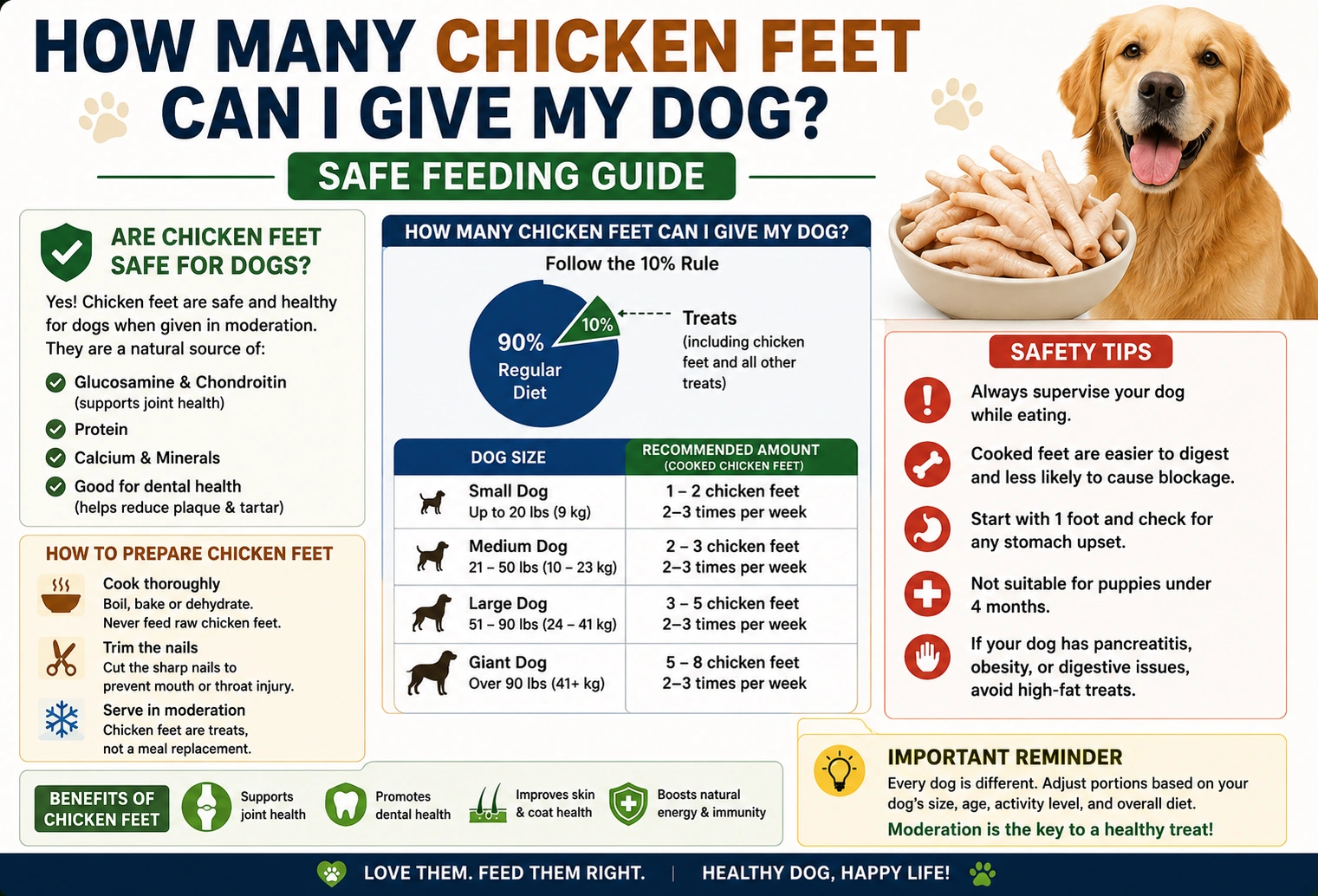
For many healthy adult dogs, 1 chicken foot at a time is a reasonable starting portion, but the right amount depends on the dog’s size, diet, chewing habits, and overall health.
A small dog may need less frequent treats, while a large dog may tolerate a larger treat. Chicken feet should be treated as an occasional treat, not a replacement for a complete and balanced dog food.
| Dog Size | Starting Amount | General Frequency |
|---|---|---|
| Small dog | ½–1 foot | Occasionally |
| Medium dog | 1 foot | Occasionally |
| Large dog | 1–2 feet | Occasionally |
| Very large dog | 1–2 feet | Occasionally |
These are general starting guidelines, not veterinary prescriptions. If your dog has a medical condition, dental problem, digestive issue, or special diet, ask your veterinarian before offering chicken feet.
How Many Chicken Feet Can I Give My Dog?
The answer depends on your dog’s size and individual needs.
For a healthy adult dog, one chicken foot is generally a more sensible starting portion than several at once.
Chicken feet are relatively small, but they still contain calories, fat, connective tissue, and bones. Treats should not displace the dog’s regular nutritionally complete food.
A practical approach is:
- Start with one chicken foot.
- Watch your dog while it eats.
- Monitor for vomiting, diarrhea, constipation, or other digestive changes.
- If your dog tolerates it well, keep chicken feet as an occasional treat rather than making them a major part of the diet.
The size and preparation of the chicken foot also matter.
Chicken Feet Serving Guide by Dog Size
There is no single serving amount that is correct for every dog. Size is a useful starting point, but your dog’s total daily calorie intake matters more.
| Dog Size | Approximate Weight | Suggested Starting Portion |
|---|---|---|
| Small | Under 20 lb | ½–1 chicken foot |
| Medium | 20–50 lb | 1 chicken foot |
| Large | 50–90 lb | 1 chicken foot |
| Extra-large | Over 90 lb | 1–2 chicken feet |
These amounts are best viewed as conservative starting points.
For example, giving two chicken feet to a large dog does not automatically mean that two are appropriate every day. Treat calories should be considered alongside everything else the dog eats.
How Often Can Dogs Eat Chicken Feet?
Chicken feet are best considered an occasional chew or treat.
A dog that handles them well might have one occasionally, but there is no nutritional need to feed chicken feet every day.
A useful general rule is to keep treats within about 10% of your dog’s daily calorie intake, with the remaining calories coming from a complete and balanced diet.
Because the calorie content of chicken feet varies depending on size and preparation, check the product’s nutrition information when available.
| Feeding Pattern | General Approach |
|---|---|
| First time | Start with ½–1 foot |
| Occasional treat | 1 foot may be suitable for many dogs |
| Several feet at once | Generally unnecessary |
| Daily large quantities | Not recommended without professional guidance |
| Dog with health problems | Ask a veterinarian first |
Can Dogs Eat Raw Chicken Feet?
Dogs can eat raw animal products, but raw chicken feet are not risk-free.
Raw poultry can carry bacteria such as Salmonella and Campylobacter. Those organisms can potentially affect dogs and people in the household.
Raw bones also carry risks, including choking, broken teeth, gastrointestinal injury, and digestive problems.
If you choose to feed raw chicken feet, use appropriate food-safety practices:
- Buy them from a reputable source.
- Keep them refrigerated or frozen as appropriate.
- Wash hands after handling raw poultry.
- Clean surfaces and bowls thoroughly.
- Do not allow children to handle raw animal products.
- Supervise your dog while chewing.
- Remove the treat if your dog tries to swallow it whole.
The safest option for your particular dog depends on its health, age, chewing behavior, and diet.
Are Chicken Feet Good for Dogs?
Chicken feet contain connective tissue, cartilage, skin, and small bones.
They can provide nutrients such as protein and collagen-related components, and some dogs enjoy them as a chew.
However, calling chicken feet a “superfood” or assuming they can replace a balanced diet would be misleading.
Their biggest practical value may be as an occasional chew or treat.
They should not replace the nutrients supplied by a properly formulated complete dog food.
Potential Benefits of Chicken Feet
1. They Provide Protein
Chicken feet contain animal protein, although their nutritional profile is different from that of a complete dog food.
2. They Contain Connective Tissue
Chicken feet contain cartilage and connective tissue, including collagen.
These components are sometimes discussed in relation to joint health, although eating chicken feet should not be viewed as a treatment for arthritis or joint disease.
3. Dogs May Enjoy Chewing Them
Chewing can provide enrichment for some dogs.
However, a chicken foot should not be considered a substitute for regular dental care.
4. They Can Be a Simple Treat
For dogs that tolerate them, chicken feet can be used as an occasional alternative to some commercially manufactured treats.
Risks and Safety Concerns
Chicken feet aren’t suitable for every dog.
Choking
A dog that gulps food rather than chewing may attempt to swallow a chicken foot quickly.
This can create a choking risk.
Always supervise your dog.
Broken Teeth
Hard bones can potentially damage or fracture teeth, particularly in aggressive chewers.
Digestive Problems
A new treat can cause:
- Diarrhea
- Vomiting
- Gas
- Constipation
- Abdominal discomfort
Introduce any new food gradually and stop if your dog reacts badly.
Bacterial Contamination
Raw poultry can contain harmful bacteria.
This creates risks for both the dog and people handling the food.
Excess Calories
Chicken feet are treats, so feeding too many can contribute to excessive calorie intake and weight gain.
Raw vs. Dehydrated Chicken Feet
Chicken feet are commonly sold raw, dehydrated, or otherwise processed.
| Type | Potential Advantage | Main Concern |
|---|---|---|
| Raw | Minimal processing | Bacterial contamination and raw-bone risks |
| Dehydrated | Convenient and less messy | Still contains bones and can be hard |
| Cooked | Easy to prepare | Cooked bones can become brittle and dangerous |
| Commercial treat | Convenient labeling | Check ingredients and feeding guidance |
Never assume that cooking makes chicken bones safer.
Cooked poultry bones can become brittle and may splinter. For this reason, cooked chicken feet should not be given to dogs.
If purchasing a commercial product, follow its feeding instructions and check how it has been processed.
How to Introduce Chicken Feet
If your dog has never eaten chicken feet, don’t immediately give several.
Use a gradual approach.
Step 1: Choose a Suitable Product
Use chicken feet intended for animal feeding from a reputable source.
Step 2: Start Small
For a first introduction, ½ to 1 chicken foot is a conservative starting point, depending on your dog’s size.
Step 3: Supervise
Watch your dog while it chews.
Pay attention to whether your dog:
- Chews normally
- Tries to swallow it whole
- Struggles with the treat
- Shows signs of discomfort
Step 4: Monitor Afterwards
For the next day, watch for digestive changes.
If your dog develops significant vomiting, diarrhea, pain, choking, lethargy, or other concerning symptoms, contact a veterinarian.
When Should You Avoid Chicken Feet?
Chicken feet may not be appropriate for dogs with certain conditions or behaviors.
Speak with your veterinarian before giving them if your dog:
- Has a history of gastrointestinal problems
- Has difficulty chewing
- Has severe dental disease
- Is prone to choking
- Has a condition requiring a restricted diet
- Is overweight and has strict calorie limits
- Has previously reacted badly to poultry
- Is very young or elderly
- Has difficulty digesting bones
Puppies deserve particular caution because their nutritional needs are different from those of adult dogs.
Chicken Feet for Puppies
Puppies should not automatically be given chicken feet simply because adult dogs can sometimes eat them.
Young dogs have developing teeth and digestive systems, and their diet needs to support growth.
If you have a puppy, ask your veterinarian whether a particular chew is appropriate for its age, size, and developmental stage.
A complete puppy diet should remain the foundation of nutrition.
How Many Chicken Feet Can a Dog Eat Per Week?
There is no universal weekly number because dogs have different calorie requirements and health needs.
Instead of focusing only on a weekly count, consider the dog’s total treat intake.
For example, if a dog receives several other treats during the day, adding chicken feet may push its total treat calories too high.
| Situation | Better Approach |
|---|---|
| Healthy adult dog | Occasional chicken foot |
| Dog receiving many other treats | Reduce extra treats |
| Overweight dog | Ask veterinarian about calorie limits |
| Dog with medical diet | Check with veterinarian |
| First time trying chicken feet | Start with a small amount |
Common Mistakes to Avoid
Giving Too Many at Once
More is not necessarily better. Start with a small amount.
Leaving the Dog Unsupervised
Even a familiar chew can become dangerous if the dog tries to swallow it.
Giving Cooked Chicken Bones
Cooked chicken bones can become brittle and may splinter.
Ignoring Calories
Treats still contribute calories. They should fit within the dog’s overall diet.
Assuming All Dogs Digest Them the Same Way
One dog may tolerate chicken feet well while another may experience digestive problems.
FAQs
1. How many chicken feet can I give my dog?
For many healthy adult dogs, one chicken foot is a reasonable starting portion. Smaller dogs may need less, while larger dogs may tolerate one or two, but the appropriate amount depends on the dog’s overall diet and health.
2. Can dogs eat chicken feet every day?
Chicken feet are generally better treated as an occasional treat, rather than a daily staple. Your dog’s complete and balanced food should provide most of its nutrition.
3. Are raw chicken feet safe for dogs?
Raw chicken feet can be fed by some owners, but they carry risks from bacteria and bones. If you choose raw feeding, use strict food-safety practices and discuss it with your veterinarian.
4. Can dogs eat cooked chicken feet?
Cooked chicken bones should not be given to dogs. Cooking can make bones brittle and more likely to splinter. This can create serious gastrointestinal risks.
5. Are chicken feet good for dogs’ joints?
Chicken feet contain cartilage and collagen-related components, but they should not be considered a treatment for joint disease. If your dog has joint problems, speak with a veterinarian about proven treatment and nutrition options.
9. Conclusion
So, how many chicken feet can I give my dog? For many healthy adult dogs, one chicken foot is a sensible starting portion, with smaller dogs potentially needing less and larger dogs sometimes tolerating one or two.
However, chicken feet should remain an occasional treat, not a replacement for complete and balanced dog food. Raw chicken feet carry bacterial and bone-related risks, while cooked chicken bones should be avoided.
Always supervise your dog while chewing, introduce new treats gradually, and speak with your veterinarian if your dog is a puppy, has health problems, follows a restricted diet, or has a history of digestive or dental issues.
Discover More Articles
How Many Gallons of Soil Is 2 Cubic Feet?