
If you’re preparing for your driver’s license test or simply want to become a safer driver, you may be asking how many feet before you signal.
Using your turn signal gives other drivers, cyclists, and pedestrians advance notice of your intentions. Signaling early helps prevent crashes, improves traffic flow, and is required by law in most places.
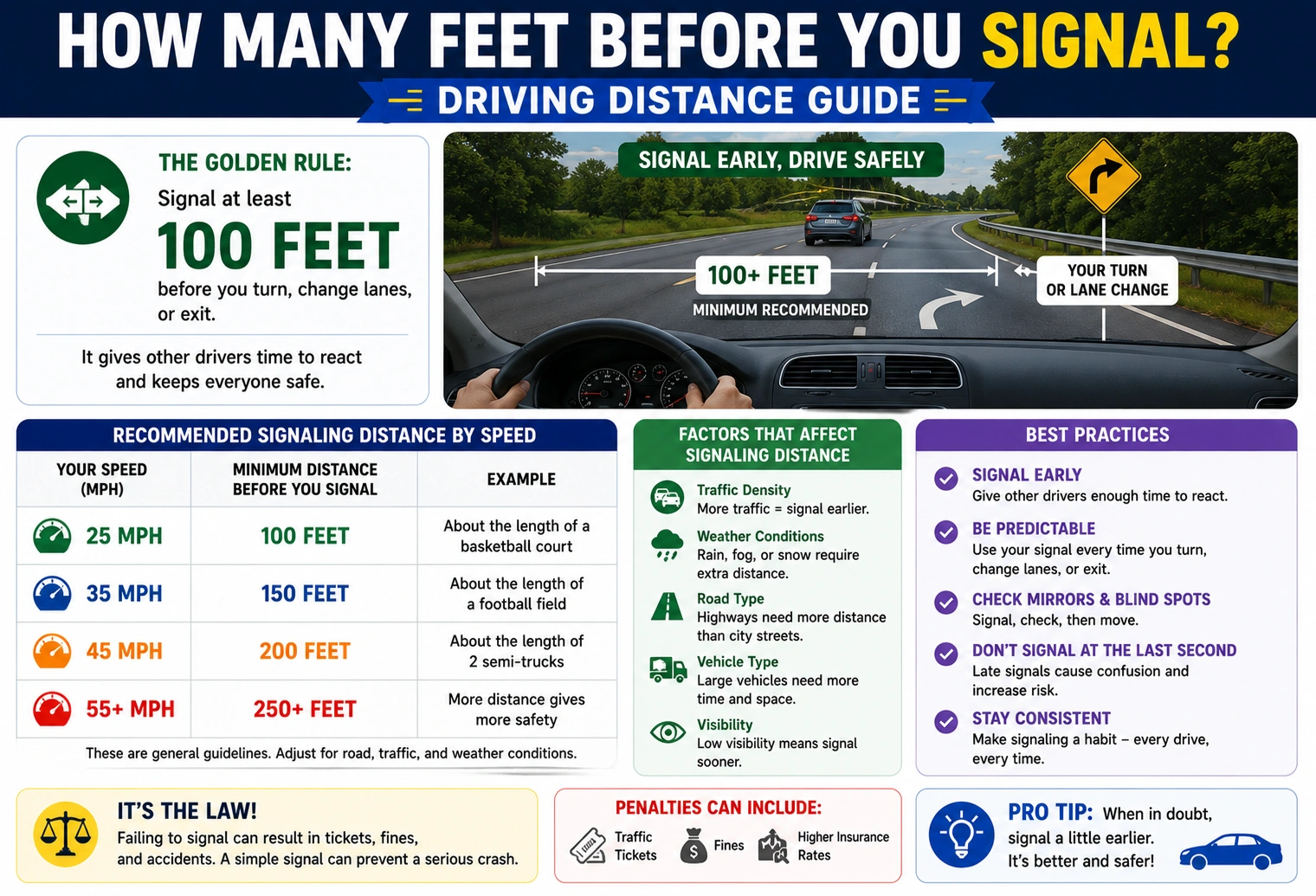
The most commonly taught rule in the United States is:
✅ Signal at least 100 feet before making a turn.
However, the exact legal requirement can vary depending on the state or country, so it’s always important to check your local driver’s handbook.
In this guide, you’ll learn when to signal, why signaling matters, and the most common mistakes drivers make.
Quick Answer
The general rule is:
✅ Signal at least 100 feet before turning.
This gives surrounding drivers enough time to react safely.
For lane changes, many driving experts recommend signaling for at least 3 to 5 seconds before moving into another lane, although legal requirements vary by jurisdiction.
Why Signaling Before Turning Is Important
Turn signals are one of the simplest and most effective safety features on a vehicle.
They help:
- Warn other drivers of your intentions.
- Give pedestrians time to react.
- Alert cyclists and motorcyclists.
- Reduce confusion at intersections.
- Lower the risk of rear-end and side-impact collisions.
Failing to signal is one of the most common causes of preventable traffic crashes.
Standard Signaling Distance
While traffic laws differ, these recommendations are widely used in driver’s education.
Turning
For most roads:
Signal at least 100 feet before turning.
This distance gives other road users enough warning.
Changing Lanes
Instead of using a specific distance, drivers are generally advised to:
- Signal for 3 to 5 seconds before changing lanes.
- Check mirrors.
- Check blind spots.
- Move only when it’s safe.
Never rely on the turn signal alone—always confirm the lane is clear.
Do All States Require the Same Distance?
No. Although 100 feet is the most common requirement across many U.S. states, traffic laws are not identical everywhere.
Some jurisdictions have different rules depending on:
- The type of road
- Vehicle speed
- Urban or rural areas
- Special traffic conditions
Always review your state’s driver’s manual before taking a licensing exam or driving in a new location.
How to Signal Correctly
Using your turn signal involves more than simply flipping the lever.
Follow these steps:
Step 1: Decide Early
Know where you’ll be turning before reaching the intersection.
Step 2: Activate Your Signal
Turn on the appropriate signal well in advance.
Step 3: Check Your Mirrors
Look behind and beside your vehicle.
Step 4: Check Blind Spots
Briefly look over your shoulder before changing lanes.
Step 5: Complete the Turn
Turn smoothly and cancel the signal if it doesn’t turn off automatically.
Common Driving Situations
Turning at an Intersection
Signal at least 100 feet before the intersection whenever possible.
Entering a Driveway
Signal early so following drivers know you’re slowing down.
Exiting a Parking Lot
Use your signal before entering traffic.
Changing Lanes on the Highway
Signal several seconds in advance, check mirrors and blind spots, then change lanes safely.
Entering a Roundabout
Signal according to your local traffic rules when exiting.
Common Mistakes Drivers Make
Signaling Too Late
Waiting until you’re already turning gives others very little time to react.
Forgetting to Signal
Always signal, even when traffic appears light.
Leaving the Signal On
If your signal doesn’t cancel automatically, switch it off promptly to avoid confusing other drivers.
Not Checking Blind Spots
A turn signal communicates your intention but does not guarantee the lane is clear.
Tips for Passing Your Driving Test
Examiners pay close attention to signaling habits.
To improve your chances of passing:
- Signal early.
- Signal every time you turn or change lanes.
- Check mirrors before signaling.
- Check blind spots before moving.
- Cancel your signal after completing the maneuver.
- Follow all posted traffic signs and speed limits.
Developing these habits early will also make you a safer driver after you receive your license.
Why Proper Signaling Improves Road Safety
Using your turn signal consistently can:
- Reduce collisions.
- Improve communication with other drivers.
- Increase predictability in traffic.
- Protect cyclists and pedestrians.
- Help traffic flow more smoothly.
Even when the road seems empty, signaling is a good habit that reinforces safe driving.
9. FAQs
1. How many feet before you signal to turn?
In many U.S. states, drivers should signal at least 100 feet before making a turn, though local laws may differ.
2. How long should you signal before changing lanes?
A common recommendation is to signal for 3 to 5 seconds before changing lanes, while also checking mirrors and blind spots.
3. Is signaling required if no other cars are around?
Yes. In many places, signaling is legally required regardless of traffic conditions and helps reinforce safe driving habits.
4. Can I fail my driving test for not signaling?
Yes. Failing to signal properly is a common reason applicants lose points or fail a driving test.
5. Why should I signal so early?
Early signaling gives other road users enough time to recognize your intentions and adjust their driving safely.
10. Conclusion
If you’re wondering how many feet before you signal, the standard guidance in many U.S. jurisdictions is to signal at least 100 feet before making a turn. For lane changes, it’s generally recommended to signal for 3 to 5 seconds before moving into another lane, while also checking your mirrors and blind spots.
Because traffic laws can vary by state or country, always follow the rules in your local driver’s handbook. Consistently signaling early not only helps you pass a driving test but also makes the roads safer for everyone by clearly communicating your intentions.
Discover More Articles
How Many Feet Is 500 Yards? Exact Yard to Feet Conversion
How Many Feet Is 7 Miles? Exact Conversion Guide
How Many Square Feet in a Linear Foot? Easy Conversion Guide