
If you’ve ever looked at a building and wondered how many feet in a story of a building, you’re not alone. Whether you’re estimating the height of an apartment complex, reading construction plans, or simply satisfying your curiosity, knowing the average height of a building story is helpful.
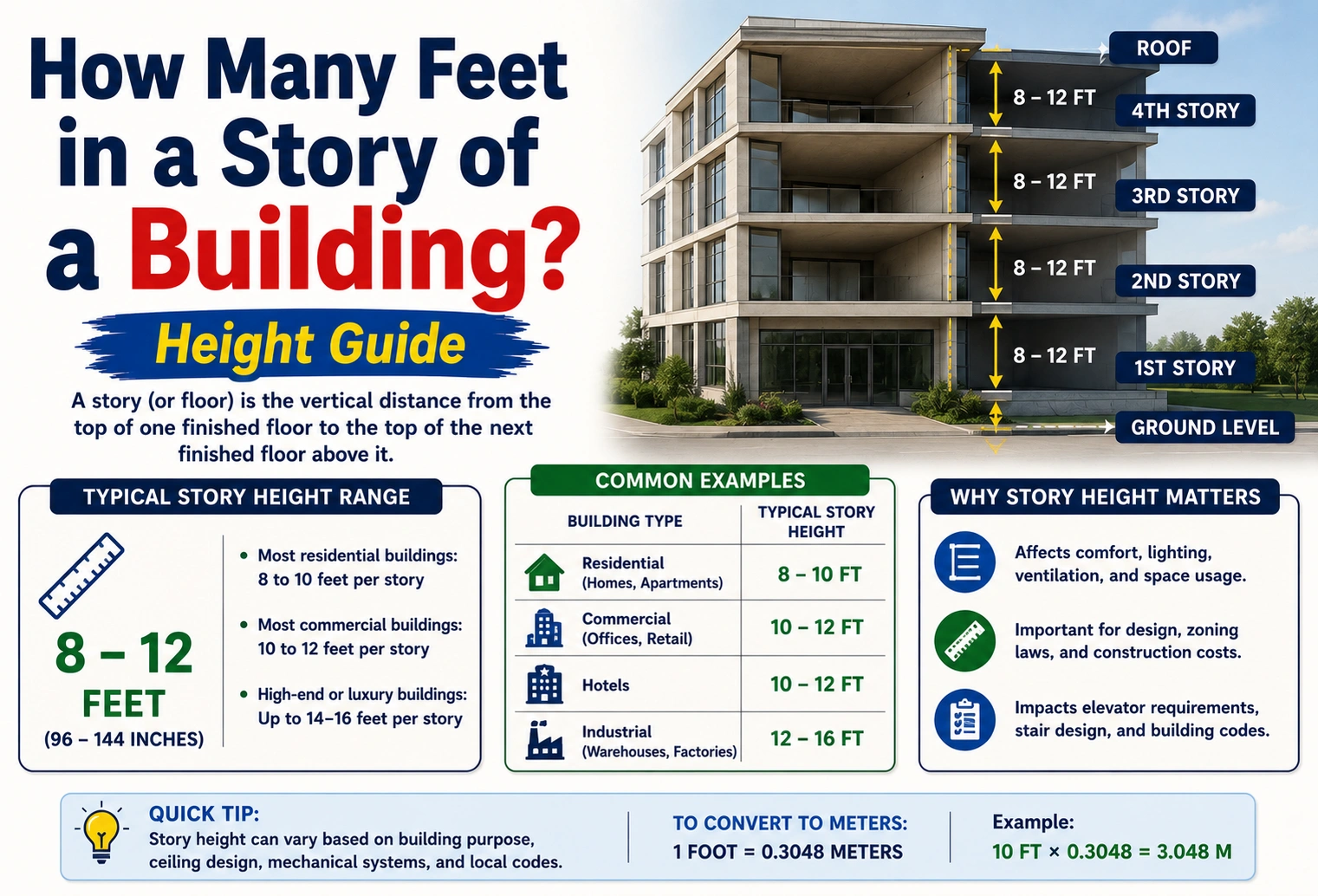
Although there is no universal standard, most buildings follow common architectural practices. The height of one story depends on the building’s purpose, ceiling height, structural components, and mechanical systems.
In general, one story is about 10 feet tall, but actual heights can range from 8 to 15 feet or more.
Quick Answer
For most buildings:
- Residential buildings: 9–10 feet per story
- Apartment buildings: 10–12 feet per story
- Commercial buildings: 12–15 feet per story
- Office buildings: 13–15 feet per story
A simple rule used by architects and builders is:
1 story ≈ 10 feet
This estimate works well for many residential structures.
What Is a Building Story?
A story (or storey in British English) is the space between one floor and the next in a building.
Each story includes more than just the room’s ceiling height. It also contains:
- Floor framing
- Ceiling materials
- Structural beams
- Electrical wiring
- Plumbing
- Heating and cooling ducts
Because of these additional components, the floor-to-floor height is usually greater than the visible ceiling height.
Average Height of One Story
Story heights vary depending on the type of building.
Residential Buildings
Most single-family homes have floor-to-floor heights between 9 and 10 feet.
Typical ceiling heights include:
- 8-foot ceilings in older homes
- 9-foot ceilings in many modern homes
- 10-foot ceilings in luxury homes
With floor framing and utilities included, the total story height is often around 10 feet.
Apartment Buildings
Apartment buildings usually have story heights ranging from 10 to 12 feet.
Extra space is needed for:
- Fire-rated floor assemblies
- Plumbing systems
- Electrical wiring
- Sound insulation
- HVAC ducts
Commercial Buildings
Commercial buildings require more vertical space than residential buildings.
Typical floor-to-floor heights range from 12 to 15 feet.
This allows room for:
- Suspended ceilings
- Air-conditioning ducts
- Lighting systems
- Sprinkler pipes
- Utility lines
Retail stores may have even taller first floors to create an open interior.
Office Buildings
Modern office buildings often feature story heights between 13 and 15 feet.
The additional space supports:
- Raised access floors
- Large HVAC systems
- Modern lighting
- Communication cables
- Flexible office layouts
Why Story Heights Vary
Several factors influence the height of each story.
Ceiling Height
Luxury homes and office buildings often have higher ceilings than standard residential homes.
Mechanical Systems
Commercial buildings need extra room for heating, cooling, ventilation, plumbing, and electrical systems.
Building Codes
Local regulations may specify minimum ceiling heights or other construction requirements.
Structural Design
Thicker floor systems and larger support beams increase floor-to-floor height.
Building Purpose
A warehouse, hospital, school, or shopping center often has taller stories than a typical home.
Story Height Comparison Chart
| Building Type | Average Story Height |
|---|---|
| Residential House | 9–10 feet |
| Apartment Building | 10–12 feet |
| Hotel | 10–12 feet |
| Office Building | 13–15 feet |
| Retail Store | 14–20 feet |
| Warehouse | 18–30 feet |
This chart provides a general guide. Actual measurements vary by building design.
How to Estimate Building Height by Stories
You can estimate the total height of a building using a simple formula.
Formula
Building Height = Number of Stories × Average Story Height
Example 1
A 5-story apartment building:
5 × 10 feet = 50 feet
Example 2
An 8-story office building:
8 × 14 feet = 112 feet
Example 3
A 12-story residential building:
12 × 10 feet = 120 feet
These estimates are useful for visualizing building heights but may differ from actual architectural plans.
Real-World Examples
Here are some familiar comparisons.
Two-Story House
A typical two-story home measures around 20 feet to the roofline, excluding the roof peak.
Four-Story Apartment
Most four-story apartment buildings are about 40 to 50 feet tall.
Six-Story Hotel
A six-story hotel often ranges from 60 to 75 feet in height.
Ten-Story Residential Building
Many 10-story apartment buildings are approximately 100 feet tall.
Common Misconceptions About Story Heights
Every Story Is Exactly 10 Feet
While 10 feet is a useful estimate, many buildings have taller or shorter floors depending on their design.
Ceiling Height Equals Story Height
Ceiling height does not include floor framing, structural beams, or utility space.
Commercial and Residential Buildings Are the Same
Commercial buildings generally require more space between floors than residential buildings.
Roof Height Is Included
Roof structures, parapets, and mechanical equipment add height beyond the top story.
Expert Tips
Use 10 Feet Per Story for Quick Estimates
This rule provides a reliable approximation for residential buildings.
Identify the Building Type
Knowing whether a building is residential, commercial, or industrial improves the accuracy of your estimate.
Consider the First Floor
Many buildings have taller ground floors for lobbies or retail spaces.
Check Official Plans
For construction or engineering projects, always rely on architectural drawings rather than estimates.
Practical Example
Suppose you’re told a building is 7 stories tall.
If it’s a residential building:
7 × 10 feet = 70 feet
If it’s an office building:
7 × 14 feet = 98 feet
This example shows why the building type matters when estimating height.
9. FAQs
How many feet is one story of a building?
Most residential stories are about 10 feet tall, while commercial stories typically range from 12 to 15 feet.
Is every building story the same height?
No. Story height depends on the building’s purpose, design, and construction standards.
How tall is a two-story house?
Most two-story homes are approximately 18 to 20 feet tall, excluding the roof peak.
Why are commercial buildings taller per story?
They require additional space for HVAC systems, electrical wiring, plumbing, and suspended ceilings.
Can I estimate a building’s height by counting stories?
Yes. Multiplying the number of stories by the average story height provides a reasonable estimate.
10. Conclusion
If you’re wondering how many feet in a story of a building, the most common answer is about 10 feet for residential buildings. However, the exact height varies depending on the building type. Apartment buildings typically range from 10 to 12 feet per story, while commercial and office buildings often require 12 to 15 feet or more per floor to accommodate structural and mechanical systems. Understanding these averages makes it easier to estimate building heights, compare structures, and interpret architectural measurements with greater confidence.
Discover More Articles
How Many Stories Is 90 Feet? Building Height Conversion Guide