
If you’re planning a landscaping project, one of the first questions you’ll ask is how many square feet does 1 ton of rock cover.
The answer depends largely on the depth of the rock layer. A thinner layer covers more area, while a deeper layer covers less.
Answer:
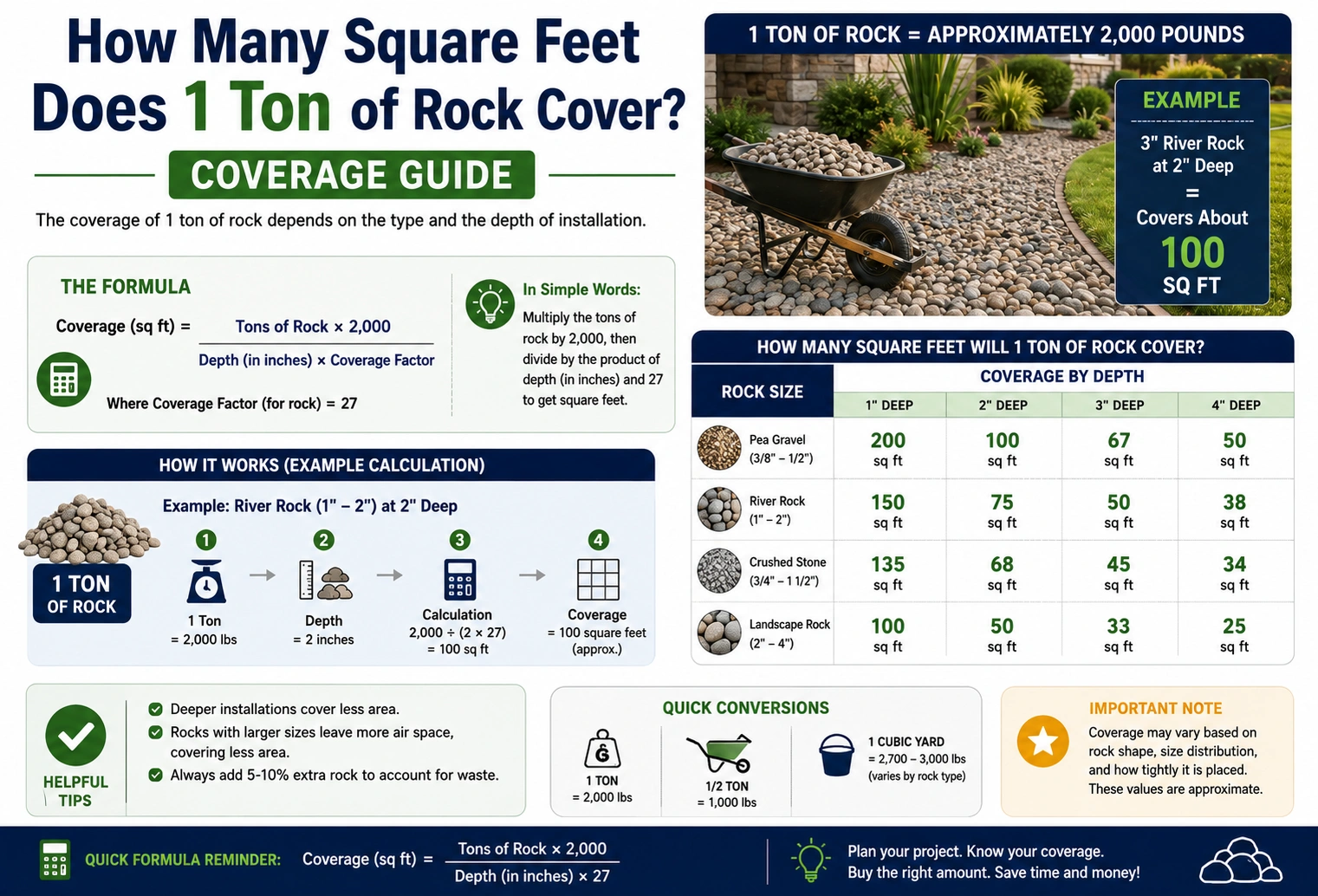
✅ One ton of landscaping rock typically covers about 100–120 square feet at a depth of 2 inches.
If you install the rock deeper or use larger decorative stones, the coverage area decreases.
Quick Answer
| Rock Depth | Approximate Coverage per Ton |
|---|---|
| 1 inch | 200–240 sq ft |
| 2 inches | 100–120 sq ft |
| 3 inches | 70–80 sq ft |
| 4 inches | 50–60 sq ft |
A 2-inch depth is the most common recommendation for decorative landscaping rock.
Rock Coverage by Depth
The depth of the rock significantly affects how much ground one ton will cover.
1-Inch Depth
- Covers approximately 200–240 square feet
- Best for decorative applications with minimal foot traffic
2-Inch Depth
- Covers approximately 100–120 square feet
- Ideal for most flower beds, pathways, and landscape borders
3-Inch Depth
- Covers around 70–80 square feet
- Suitable for improved weed suppression and drainage
4-Inch Depth
- Covers approximately 50–60 square feet
- Often used for heavy-duty landscaping or erosion control
How to Calculate Rock Coverage
To estimate how much rock you need:
- Measure the length and width of the area.
- Calculate the total square footage.
Example:
- Length = 20 feet
- Width = 10 feet
Calculation:
20 × 10 = 200 square feet
At a 2-inch depth, you’ll need approximately 2 tons of rock, since one ton covers about 100–120 square feet.
Rock Coverage Chart
| Area | Tons Needed (2-Inch Depth) |
| 100 sq ft | 1 ton |
| 200 sq ft | 2 tons |
| 300 sq ft | 3 tons |
| 500 sq ft | 5 tons |
| 1,000 sq ft | 9–10 tons |
These estimates may vary depending on the rock type and particle size.
Factors That Affect Coverage
Several variables influence how much area one ton of rock can cover.
Rock Size
Larger rocks leave more air gaps, reducing overall coverage.
Rock Type
River rock, crushed stone, pea gravel, and lava rock have different densities.
Installation Depth
Increasing the depth decreases the square footage covered.
Ground Conditions
Uneven terrain may require additional material to achieve a consistent depth.
Estimating Rock for Your Project
For the best results:
- Measure all planting beds and pathways accurately.
- Decide on the desired depth before ordering.
- Purchase 5–10% extra to account for settling, uneven ground, and future touch-ups.
- Consult your supplier if using specialty stone, as coverage can vary by material.
Common Mistakes
Ordering Based Only on Square Footage
Depth is just as important as the total area.
Ignoring Rock Size
Decorative river rock and crushed gravel may have different coverage rates because of differences in density and shape.
Not Buying Extra Material
A small surplus helps with leveling, repairs, and future landscaping changes.
Expert Tips
- Use 2 inches of rock for most decorative landscaping projects.
- Install landscape fabric underneath to reduce weed growth.
- Measure carefully before ordering.
- Keep a small amount of extra rock for maintenance and replacement.
9. FAQs
1. How many square feet does 1 ton of rock cover?
At a 2-inch depth, one ton typically covers 100–120 square feet.
2. How much does one ton of rock cover at 1 inch deep?
It usually covers approximately 200–240 square feet.
3. Does rock size affect coverage?
Yes. Larger stones generally cover less area because they create more empty space between rocks.
4. How do I calculate how much rock I need?
Measure the area in square feet and choose your desired depth. Then divide the total area by the estimated coverage per ton.
5. Should I order extra landscaping rock?
Yes. Buying 5–10% extra helps compensate for settling, waste, and future repairs.
10. Conclusion
If you’re asking how many square feet does 1 ton of rock cover, the general answer is about 100–120 square feet at a 2-inch depth. Shallower installations can cover up to 240 square feet, while deeper layers cover less.
By measuring your project carefully, selecting the appropriate rock depth, and ordering a little extra material, you can complete your landscaping project efficiently and achieve a professional-looking result.
Discover More Articles
How Many Cubic Feet in a Bag of QUIKRETE? Complete Yield Guide