

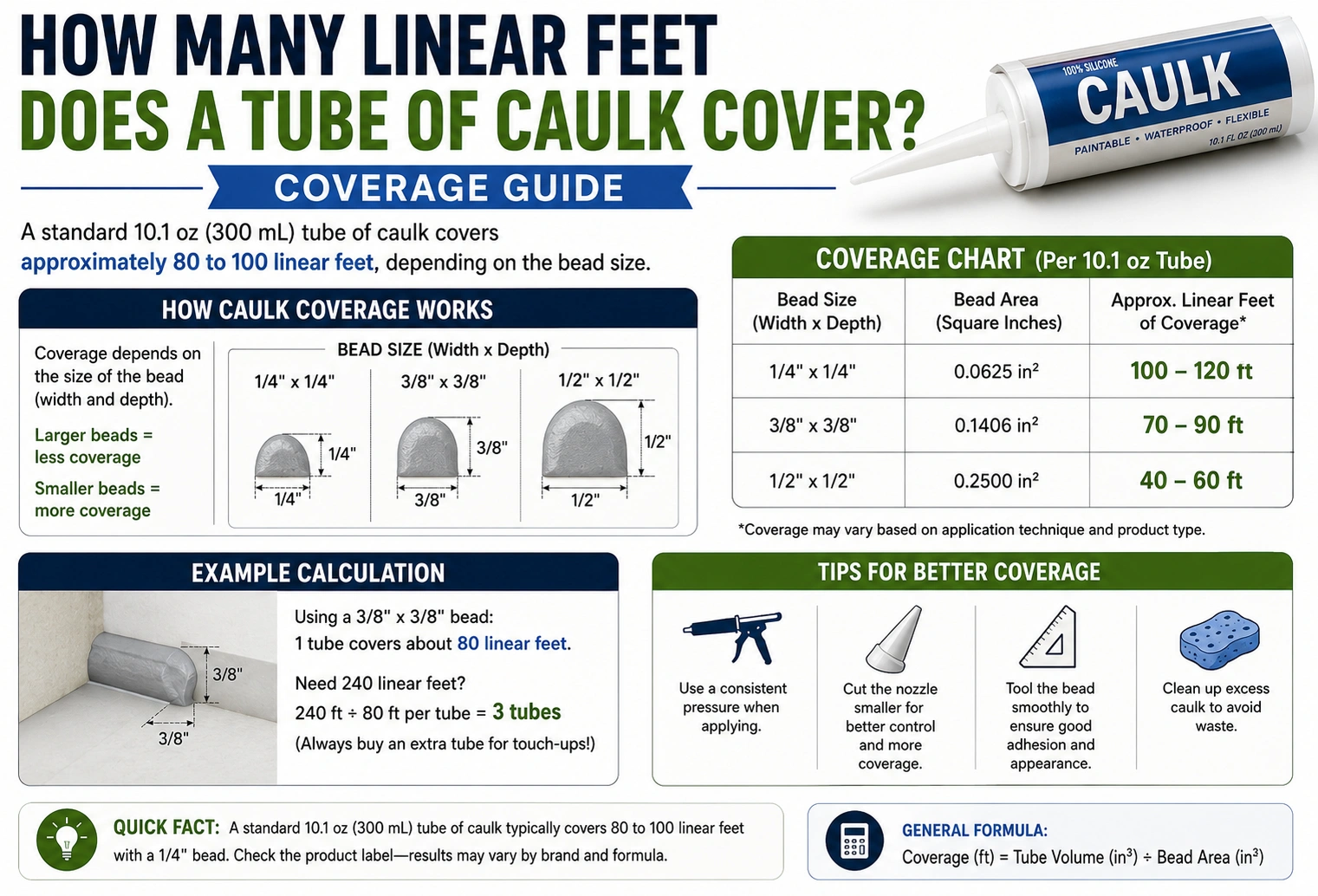
If you’re wondering how many linear feet does a tube of caulk cover, the answer depends primarily on the size of the caulk bead.
A standard 10-ounce tube of caulk typically covers:
- About 30–55 linear feet with a medium-sized bead.
- Up to 90–100 linear feet with a small bead.
- Less than 25 linear feet with a large bead.
The wider and deeper the bead, the less distance one tube will cover.
Quick Answer
| Bead Size | Approximate Coverage |
|---|---|
| Small (1/8 in) | 90–100 linear feet |
| Medium (3/16 in) | 50–60 linear feet |
| Large (1/4 in) | 30–35 linear feet |
| Extra Large | 20–25 linear feet |
Most homeowners can expect one 10-ounce tube of caulk to cover roughly 30 to 55 linear feet for common sealing jobs.
What Determines Caulk Coverage?
Several factors affect how much area a single tube can seal.
These include:
- Bead width
- Bead depth
- Joint size
- Surface texture
- Application technique
- Amount of waste
A narrow bead stretches much farther than a thick bead.
Standard Coverage Chart
Below are approximate coverage estimates for a standard 10-ounce tube.
| Bead Width × Depth | Approximate Coverage |
| 1/8 × 1/8 in | 90–100 ft |
| 3/16 × 3/16 in | 50–60 ft |
| 1/4 × 1/4 in | 30–35 ft |
| 3/8 × 3/8 in | 15–20 ft |
Actual coverage varies slightly depending on the product and application.
How to Calculate Coverage
To estimate how many tubes you need:
- Measure the total length of all joints.
- Determine the required bead size.
- Compare your measurements with the manufacturer’s coverage chart.
Example:
If your project requires sealing 120 linear feet using a 1/4-inch bead, and one tube covers 30 feet, you’ll need:
120 ÷ 30 = 4 tubes
Buying one extra tube is often recommended to account for waste and touch-ups.
Common Home Projects
A single tube of caulk is commonly used for:
- Bathroom tubs
- Kitchen countertops
- Sinks
- Shower enclosures
- Windows
- Doors
- Baseboards
- Exterior trim
The number of tubes required depends on the total joint length and bead size.
Real-World Examples
Understanding how much a tube of caulk covers makes it easier to purchase the right amount for your project.
Bathtub
A standard bathtub usually requires one tube of caulk for sealing around the tub if the existing joint is average in width.
Kitchen Countertop
Many kitchen countertops with backsplashes can often be sealed with one tube, depending on the total seam length.
Windows
Caulking several standard windows may require one or more tubes, depending on the number of windows and the width of the gaps being sealed.
Baseboards
Long runs of baseboards often require multiple tubes because the total linear footage can add up quickly.
Tips for Maximizing Caulk Coverage
Cut the Nozzle Correctly
Cut the nozzle at the smallest opening that still provides the bead size you need. A larger opening dispenses more caulk and reduces total coverage.
Apply a Consistent Bead
Keeping the bead even helps avoid wasting material and produces a cleaner finish.
Clean the Surface First
Remove dust, old caulk, grease, and moisture before applying new caulk to improve adhesion and reduce the need for reapplication.
Smooth the Bead
Use a caulk finishing tool or a damp finger (when appropriate for the product) to create a neat seal and ensure good contact with the surfaces.
Common Mistakes
Buying Too Little Caulk
Many DIY projects require more than one tube, especially when sealing multiple rooms or long joints.
Applying an Oversized Bead
Using a bead larger than necessary wastes material and significantly reduces the number of linear feet one tube can cover.
Ignoring the Manufacturer’s Instructions
Different products may have different recommended bead sizes, curing times, and coverage estimates. Always check the label for the most accurate information.
Not Accounting for Waste
Small amounts of caulk are often lost during setup, trimming the nozzle, or finishing the bead. Purchasing one extra tube can help prevent delays.
Frequently Asked Questions
How many linear feet does a tube of caulk cover?
A standard 10-ounce tube typically covers 30 to 55 linear feet with a medium-sized bead. Smaller beads may cover up to 90–100 feet, while larger beads cover less.
Does bead size affect coverage?
Yes. A wider and deeper bead uses more caulk, reducing the total number of linear feet a tube can cover.
How many tubes do I need?
Divide the total length of the joints by the expected coverage per tube. It’s also wise to purchase one additional tube for waste and future touch-ups.
What size tube is most common?
The 10-ounce cartridge is the most common size used for household caulking projects and fits standard caulk guns.
Can one tube caulk an entire bathroom?
For many standard bathrooms, one tube may be enough to seal a bathtub or shower perimeter. Larger bathrooms or projects involving multiple fixtures may require additional tubes.
Conclusion
If you’re asking how many linear feet does a tube of caulk cover, the answer depends mainly on the bead size. A standard 10-ounce tube generally covers 30–55 linear feet with a medium bead, while smaller beads can extend coverage to 90–100 linear feet.
Measuring your joints, selecting the proper bead size, and allowing for a small amount of waste will help you estimate how many tubes you’ll need. Careful planning ensures you have enough material to complete your sealing project efficiently while minimizing unnecessary purchases.
Discover More Articles
How Many Feet Are in 5 Miles? Exact Conversion Guide