
If you’re wondering 2 cubic feet of mulch is how many yards, the answer is:
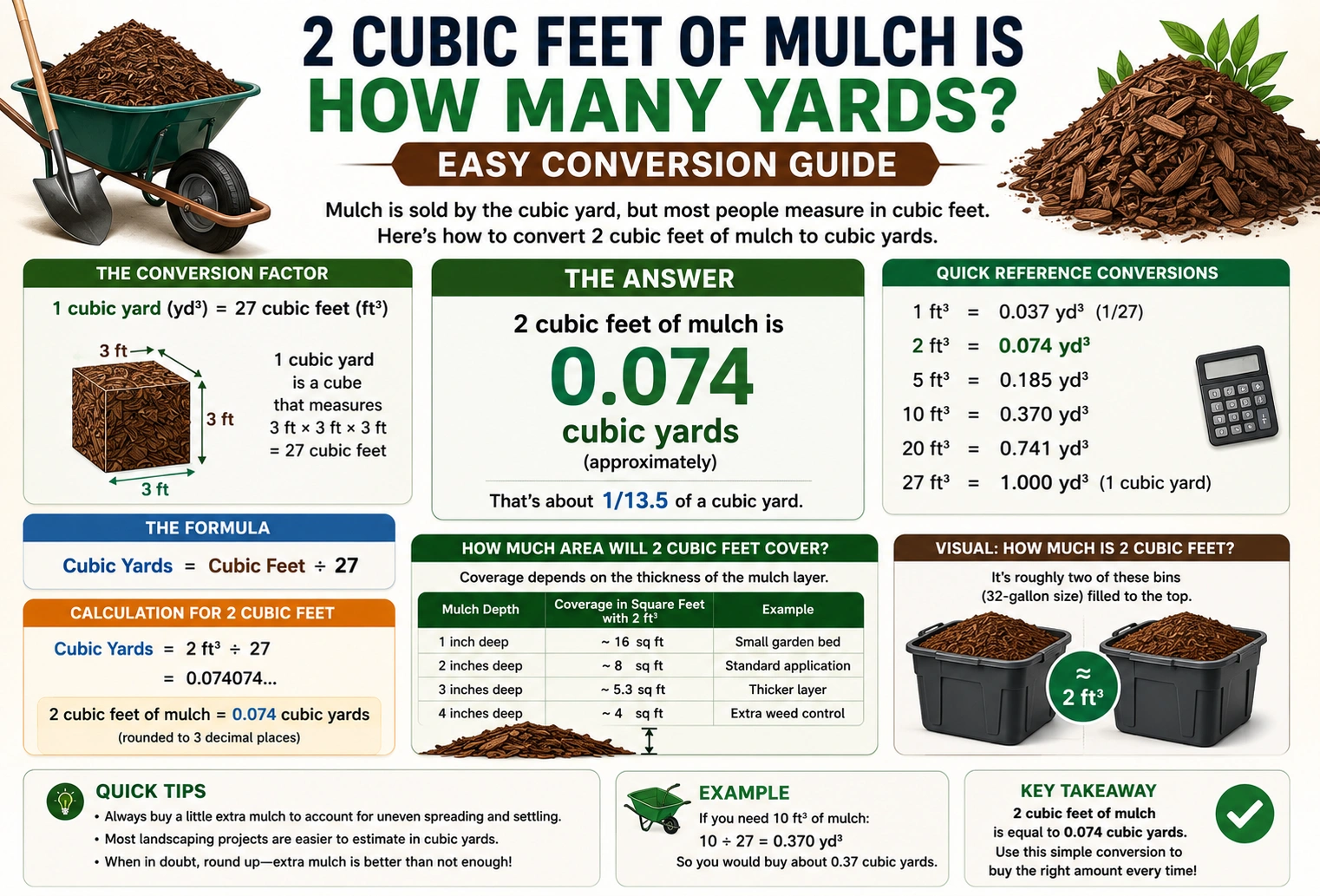
2 cubic feet = approximately 0.074 cubic yards
This conversion is useful when comparing bagged mulch, which is usually sold in cubic feet, with bulk mulch, which is commonly sold by the cubic yard.
Quick Answer
| Cubic Feet | Cubic Yards |
|---|---|
| 2 cubic feet | 0.074 cubic yards |
So:
2 cubic feet of mulch ≈ 0.074 cubic yards
Conversion Formula
To convert cubic feet to cubic yards, use the following formula:
Cubic Yards = Cubic Feet ÷ 27
There are 27 cubic feet in one cubic yard because:
- 1 yard = 3 feet
- 3 × 3 × 3 = 27 cubic feet
Step-by-Step Calculation
Let’s convert 2 cubic feet into cubic yards.
Step 1
Write the formula:
Cubic Yards = Cubic Feet ÷ 27
Step 2
Insert the value:
2 ÷ 27
Step 3
Calculate:
0.07407
Rounded:
2 cubic feet = 0.074 cubic yards
Why Is Mulch Sold in Cubic Feet and Cubic Yards?
Mulch is commonly available in two forms:
Bagged Mulch
Small quantities are usually sold in 2-cubic-foot bags, making them convenient for homeowners and small landscaping projects.
Bulk Mulch
Larger landscaping jobs often use bulk mulch, which is sold by the cubic yard. Buying in bulk can be more economical for covering large garden beds or commercial properties.
Common Mulch Conversion Chart
| Cubic Feet | Cubic Yards |
| 2 | 0.074 |
| 5 | 0.185 |
| 10 | 0.370 |
| 15 | 0.556 |
| 20 | 0.741 |
| 27 | 1.000 |
| 54 | 2.000 |
This chart provides quick conversions when estimating the amount of mulch needed for landscaping projects.
When Is This Conversion Useful?
Knowing the conversion between cubic feet and cubic yards helps when:
- Comparing bagged and bulk mulch prices
- Planning landscaping projects
- Estimating delivery quantities
- Calculating garden bed coverage
- Ordering the correct amount of mulch
- Avoiding overbuying or underbuying materials
How Much Area Does 2 Cubic Feet of Mulch Cover?
The amount of ground a 2-cubic-foot bag of mulch covers depends on the depth at which it is spread.
| Mulch Depth | Approximate Coverage |
|---|---|
| 1 inch | 24 square feet |
| 2 inches | 12 square feet |
| 3 inches | 8 square feet |
| 4 inches | 6 square feet |
A depth of 2–3 inches is commonly recommended for most flower beds and landscaped areas because it helps retain moisture and suppress weeds while allowing water to reach plant roots.
Bagged Mulch vs. Bulk Mulch
Understanding the difference between bagged and bulk mulch can help you choose the most economical option.
Bagged Mulch
- Easy to transport
- Convenient for small projects
- Clean and simple to store
- Commonly sold in 2-cubic-foot bags
Bulk Mulch
- Better for large landscaping jobs
- Delivered by the cubic yard
- Often costs less per unit of volume
- Reduces the number of individual bags you need to handle
If you’re covering a large area, buying mulch by the cubic yard is usually more cost-effective.
How Many 2-Cubic-Foot Bags Equal One Cubic Yard?
Since:
- 1 cubic yard = 27 cubic feet
Divide by the size of each bag:
27 ÷ 2 = 13.5
So, you’ll need about 14 bags of 2-cubic-foot mulch to equal 1 cubic yard.
This is a useful estimate when comparing bulk and bagged mulch prices.
Common Conversion Mistakes
Confusing Cubic Feet with Square Feet
Cubic feet measure volume, while square feet measure area.
Mulch is purchased by volume but covers an area based on the depth at which it is applied.
Forgetting the 27-to-1 Rule
Some people divide by 3 instead of 27.
Remember:
1 cubic yard = 27 cubic feet
Always divide cubic feet by 27 to convert to cubic yards.
Ignoring Mulch Depth
A bag spread at 1 inch covers much more area than the same bag spread at 3 inches.
Choose a consistent mulch depth before estimating how much material you’ll need.
Tips for Buying the Right Amount of Mulch
Measure Your Garden Bed
Determine the length and width of the area you want to cover to calculate its square footage.
Decide on the Mulch Depth
Most landscaping professionals recommend 2–3 inches for decorative beds and around trees.
Compare Bagged and Bulk Prices
For small projects, bagged mulch is convenient. For larger areas, bulk mulch often provides better value.
Buy a Little Extra
Purchasing a small amount of extra mulch can help account for settling, uneven ground, and future touch-ups.
Frequently Asked Questions
How many cubic yards is 2 cubic feet of mulch?
2 cubic feet equals approximately 0.074 cubic yards.
How many 2-cubic-foot bags make one cubic yard?
You’ll need approximately 14 bags because 27 cubic feet ÷ 2 cubic feet per bag = 13.5 bags.
How much area does a 2-cubic-foot bag of mulch cover?
Coverage depends on depth. At a 2-inch depth, one bag covers about 12 square feet. At a 3-inch depth, it covers about 8 square feet.
Why is bulk mulch sold in cubic yards?
Large landscaping projects require significant amounts of mulch, making cubic yards a more practical unit for purchasing and delivery.
How do I convert cubic feet to cubic yards?
Use the formula:
Cubic Yards = Cubic Feet ÷ 27
This works for mulch, soil, gravel, compost, and other bulk landscaping materials.
Conclusion
If you’re asking 2 cubic feet of mulch is how many yards, the exact answer is approximately 0.074 cubic yards. Since 1 cubic yard equals 27 cubic feet, dividing 2 by 27 provides the correct conversion.
Knowing this conversion makes it easier to compare bagged mulch with bulk mulch, estimate project costs, and purchase the right amount of material. Whether you’re refreshing a small flower bed or planning a larger landscaping project, understanding cubic feet and cubic yards helps you buy mulch more accurately and avoid unnecessary waste.
Discover More Articles
How Many Square Feet Is an Average Driveway? Size Guide