

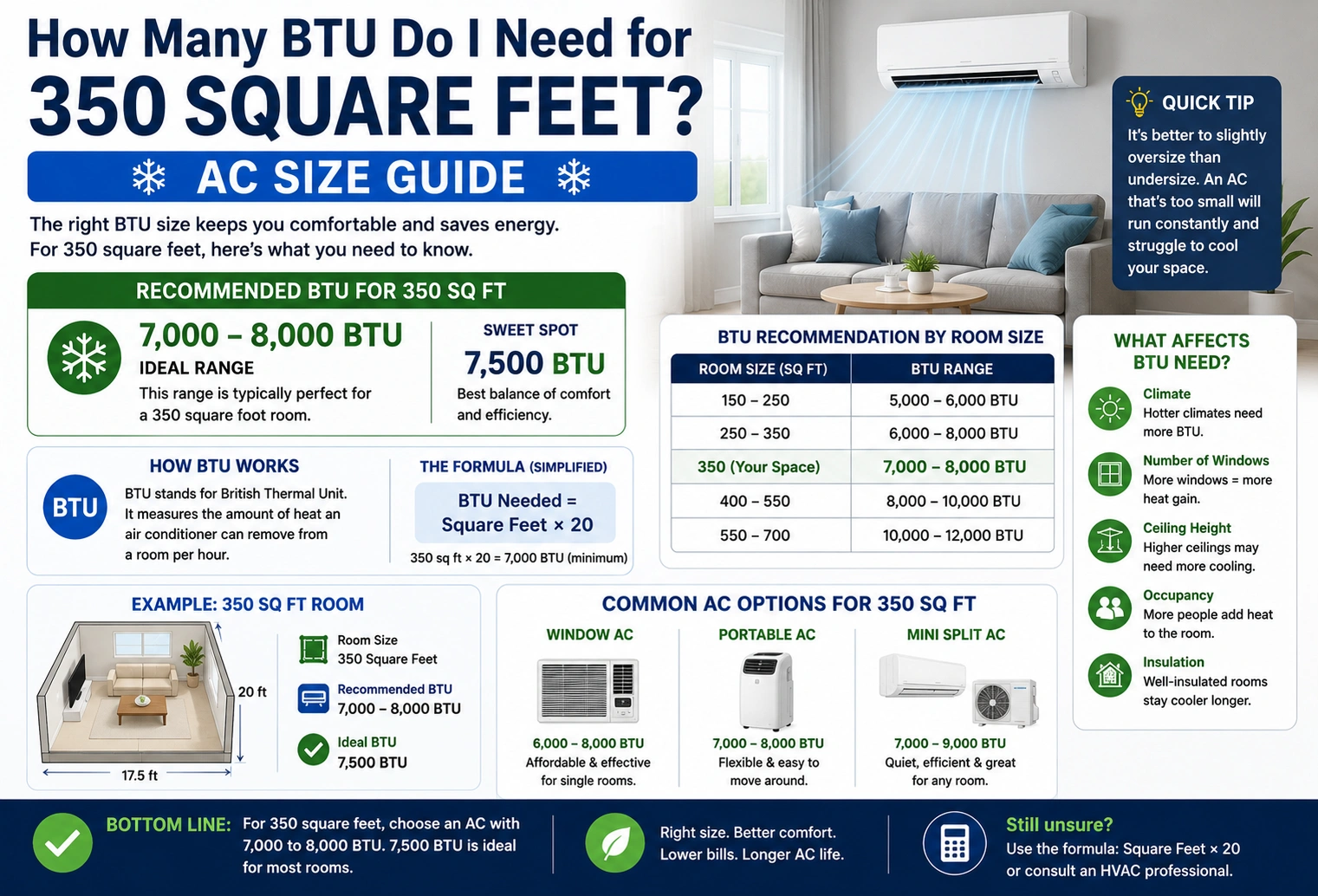
If you’re wondering how many BTU do I need for 350 square feet, the general recommendation is around 8,000 BTUs for an average room under normal conditions.
However, the ideal BTU rating depends on several factors, including:
- Ceiling height
- Climate
- Sun exposure
- Insulation quality
- Number of occupants
- Heat-producing appliances
While 8,000 BTUs is a common recommendation for a typical 350-square-foot room, some spaces may require slightly more or less cooling capacity.
Quick Answer
| Room Size | Recommended BTU* |
|---|---|
| 350 square feet | About 8,000 BTUs |
*General guideline for average residential rooms. Actual requirements may vary based on room conditions.
Recommended BTU for 350 Square Feet
Many air conditioner sizing guides recommend an 8,000-BTU unit for rooms of approximately 300 to 350 square feet.
An appropriately sized unit helps:
- Maintain comfortable temperatures
- Improve energy efficiency
- Reduce unnecessary power consumption
- Provide more consistent cooling
Choosing an air conditioner that is too small may struggle to cool the room, while an oversized unit may cycle on and off too frequently, reducing efficiency and humidity control.
How Is BTU Calculated?
BTU stands for British Thermal Unit, a measurement of how much heat an air conditioner can remove from a room in one hour.
In general:
- Larger rooms require more BTUs.
- Smaller rooms require fewer BTUs.
Although square footage is the starting point, HVAC professionals also consider several other factors before selecting the ideal cooling capacity.
Factors That Affect BTU Requirements
Sunlight
Rooms with large windows or direct afternoon sunlight often require additional cooling capacity.
Ceiling Height
Rooms with ceilings higher than the standard 8 feet contain more air volume and may need a larger air conditioner.
Insulation
Well-insulated homes retain cool air more effectively, while poorly insulated rooms may require additional BTUs.
Occupancy
Rooms that are regularly occupied by several people generate more body heat.
Many sizing recommendations suggest adding cooling capacity when more than two people frequently use the room.
Heat-Producing Appliances
Computers, televisions, ovens, refrigerators, and other electronics generate heat that can increase cooling needs.
General BTU Size Chart
| Room Size | Recommended BTU |
| 150 sq ft | 5,000 BTU |
| 250 sq ft | 6,000 BTU |
| 300 sq ft | 7,000 BTU |
| 350 sq ft | 8,000 BTU |
| 450 sq ft | 10,000 BTU |
| 550 sq ft | 12,000 BTU |
| 700 sq ft | 14,000 BTU |
This chart provides a general starting point. Manufacturer recommendations and local climate conditions should also be considered when selecting an air conditioner.
Window AC vs. Portable AC
Both window and portable air conditioners are available in the 8,000-BTU range.
Window Air Conditioner
- Generally more energy efficient
- Often provides stronger cooling
- Doesn’t occupy floor space
- Common choice for bedrooms and living rooms
Portable Air Conditioner
- Easier to move between rooms
- Requires floor space
- Convenient where window installation isn’t practical
- Often has slightly lower effective cooling performance than similarly rated window units
Choosing the Right Air Conditioner
Selecting the correct air conditioner involves more than simply matching the room’s square footage.
When shopping for an AC unit, consider:
- Room size
- Ceiling height
- Number of windows
- Sun exposure
- Home insulation
- Number of occupants
- Local climate
A properly sized air conditioner provides better comfort and operates more efficiently.
What Happens if the BTU Rating Is Too Low?
An undersized air conditioner may struggle to cool a 350-square-foot room.
Common problems include:
- Longer running times
- Higher energy bills
- Uneven cooling
- Difficulty reaching the desired temperature
- Increased wear on the unit
Choosing a unit with sufficient cooling capacity helps avoid these issues.
What Happens if the BTU Rating Is Too High?
A larger unit isn’t always better.
An oversized air conditioner may:
- Cool the room too quickly
- Cycle on and off frequently
- Remove less humidity from the air
- Waste electricity
- Increase equipment wear over time
Proper sizing is important for both comfort and energy efficiency.
Tips for Better Cooling Performance
You can improve your air conditioner’s effectiveness by following a few simple practices.
Close Doors and Windows
Keeping warm outdoor air out helps the unit cool the room more efficiently.
Use Curtains or Blinds
Blocking direct sunlight during the hottest part of the day reduces heat gain and eases the workload on your air conditioner.
Clean the Air Filter
A dirty filter restricts airflow and reduces cooling performance.
Follow the manufacturer’s maintenance recommendations for cleaning or replacing filters.
Seal Air Leaks
Weatherstripping around doors and windows can reduce cool air loss and improve energy efficiency.
Use Ceiling Fans
Ceiling fans improve air circulation, helping the room feel cooler without lowering the thermostat as much.
Common BTU Sizing Mistakes
Choosing Based Only on Price
A less expensive unit may not provide enough cooling for your room, leading to poor performance and higher operating costs.
Ignoring Ceiling Height
Rooms with vaulted or unusually high ceilings contain more air volume and may require additional cooling capacity.
Overlooking Sun Exposure
Rooms that receive strong afternoon sunlight often need more cooling than shaded rooms of the same size.
Forgetting About Occupancy
Home offices, family rooms, or entertainment areas with multiple people or electronic devices may generate additional heat.
Frequently Asked Questions
How many BTUs do I need for 350 square feet?
For an average room, about 8,000 BTUs is a common recommendation. The ideal size may vary depending on insulation, sunlight, ceiling height, and other factors.
Is an 8,000 BTU air conditioner enough for 350 square feet?
In many cases, yes. An 8,000-BTU unit is commonly recommended for rooms around 300–350 square feet under average conditions.
Can I use a 6,000 BTU AC for 350 square feet?
A 6,000-BTU unit may be undersized for many 350-square-foot rooms and could struggle to maintain comfortable temperatures, especially in warmer climates or sunny spaces.
Should I buy a larger AC just to be safe?
Not necessarily. An oversized unit may cool the room quickly but cycle on and off more often, reducing humidity control and overall efficiency.
Does insulation affect BTU requirements?
Yes. Well-insulated rooms generally require less cooling than poorly insulated rooms of the same size.
Conclusion
If you’re asking how many BTU do I need for 350 square feet, a good starting point is approximately 8,000 BTUs for a typical residential room. However, the best air conditioner size also depends on factors such as ceiling height, insulation, sunlight exposure, climate, and occupancy.
Choosing the right BTU rating helps your air conditioner cool efficiently, maintain comfortable indoor temperatures, and avoid unnecessary energy use. For the most accurate recommendation—especially for unusual room layouts or challenging climates—consider consulting the manufacturer’s sizing guide or an HVAC professional.
Discover More Articles
How Many Feet Is Cat6 Good For? Cable Distance Guide