

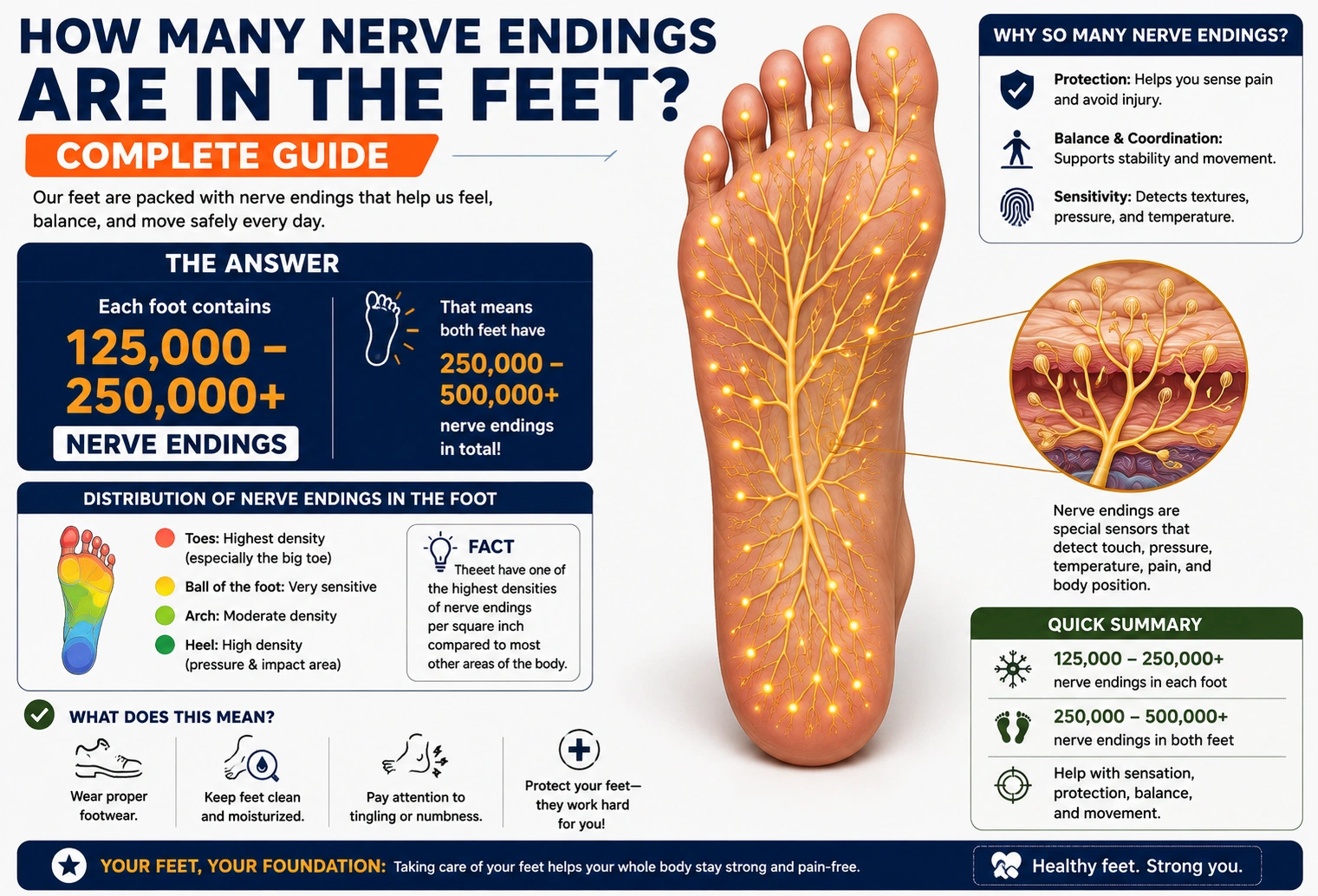
The feet contain a large and complex network of nerves that allows you to detect touch, pressure, vibration, temperature, and pain. Because the feet constantly interact with the ground, this sensory information also helps your brain understand body position and maintain balance.
A commonly repeated claim is that the soles of the feet contain thousands of nerve endings, sometimes described as having roughly 200,000 nerve endings across the soles. However, there is not a universally accepted scientific count of exactly how many nerve endings are in the feet.
The reason is that “nerve endings” can refer to several different types of sensory receptors and microscopic nerve fibers, which are difficult to count as a single total.
Quick Answer
There is no scientifically established single number for all the nerve endings in the feet. The feet contain a dense network of sensory nerves and receptors, particularly in the soles, that detect pressure, touch, vibration, temperature, and pain.
Do Feet Have Thousands of Nerve Endings?
Yes, the feet contain a substantial number of sensory nerve fibers and specialized receptors.
However, claims that give one exact number should be treated cautiously. Human sensory systems are complex, and researchers generally describe nerve supply and receptor density rather than assigning one definitive number to every nerve ending in both feet.
The soles are particularly important because they constantly receive information about contact with the ground.
Every step produces sensory signals that help the nervous system determine:
- Where the foot is positioned
- How much pressure is being applied
- Whether the surface is smooth or uneven
- Whether something is hot or cold
- Whether an object is causing pain
- How the body should adjust its balance
Why Are the Feet So Sensitive?
The feet need to detect changes in their environment.
When you stand or walk, sensory receptors in the skin and deeper tissues provide information to the nervous system. Your brain uses these signals together with information from your eyes, inner ear, joints, and muscles.
This sensory feedback helps you remain upright and coordinate movement.
The sensitivity of the feet is particularly noticeable when walking barefoot across different surfaces.
For example, your feet can distinguish between:
- Carpet
- Grass
- Sand
- Tile
- Wood
- Concrete
- Uneven ground
These sensations are produced by signals traveling through sensory nerves to the nervous system.
Types of Sensory Receptors in the Feet
The skin contains different types of sensory receptors. Each responds to particular kinds of stimulation.
Touch Receptors
These receptors detect physical contact and help you recognize when something touches your skin.
Pressure Receptors
Pressure-sensitive receptors respond when force is applied to the foot.
This is especially important when standing and walking because pressure shifts constantly as your weight moves from one part of the foot to another.
Vibration Receptors
Some sensory receptors respond particularly well to vibration or rapid changes in pressure.
Temperature Receptors
Temperature-sensitive nerve endings help detect heat and cold.
Pain Receptors
Pain-sensing nerve endings, known as nociceptors, alert the nervous system when potentially damaging stimuli occur.
These receptors help protect the feet from injuries such as excessive heat, sharp objects, or damaging pressure.
Nerves That Supply the Feet
The foot receives sensory and motor nerve supply from several major nerves.
Important nerves involved in foot sensation include branches of the:
- Tibial nerve
- Deep fibular nerve
- Superficial fibular nerve
- Sural nerve
- Saphenous nerve
The tibial nerve gives rise to the medial and lateral plantar nerves, which provide important sensory information from the sole of the foot.
Different areas of the foot therefore receive sensation from different nerve branches.
Why the Soles Feel Especially Sensitive
The soles of the feet have a specialized sensory role.
Unlike many other areas of the body, the soles regularly experience:
- Body weight
- Pressure
- Friction
- Changes in surface texture
- Temperature changes
- Repeated impact
The nervous system needs to interpret these signals quickly.
For example, when you step on an uneven surface, sensory information from the foot helps your body make small adjustments to your ankle, knee, hips, and posture.
How Nerve Endings Help With Balance
Sensory information from the feet plays an important role in balance.
When you stand still, your body constantly makes tiny adjustments to maintain your center of gravity.
Your feet provide information about:
- Pressure distribution
- Surface contact
- Body position
- Movement
- Changes in weight
This information works together with signals from the eyes and vestibular system in the inner ear.
This process is part of proprioception and postural control, which allow the nervous system to understand where the body is positioned and how it is moving.
Why Walking Barefoot Feels Different
Walking barefoot increases the amount of direct sensory information reaching the feet.
Shoes and socks provide a physical barrier between the skin and the ground. Bare feet, by contrast, directly experience changes in:
- Texture
- Temperature
- Pressure
- Surface shape
- Friction
This is why walking barefoot on grass can feel dramatically different from walking barefoot on a smooth indoor floor.
What Can Affect Sensation in the Feet?
Foot sensation can change for many reasons.
Temporary changes may occur after sitting or standing in one position for a long time.
Other factors can also affect how the feet perceive touch or pressure.
These may include:
- Nerve compression
- Injuries
- Certain medications
- Circulatory problems
- Neurological disorders
- Metabolic conditions
- Aging
Persistent numbness, burning, tingling, loss of sensation, or unexplained changes in foot sensation should be discussed with a qualified healthcare professional.
Nerve Endings vs. Nerves
It’s important to distinguish between nerves and nerve endings.
A nerve is a bundle of nerve fibers that carries signals between the body and nervous system.
A nerve ending is a specialized terminal structure where sensory information can be detected or transmitted.
Therefore, saying that the foot contains a certain number of “nerves” is not the same as counting its individual sensory endings.
This distinction is one reason simple claims about a precise number of nerve endings can be misleading.
Why Foot Sensation Matters
Healthy foot sensation helps people recognize potentially harmful conditions.
For example, sensory feedback can help you notice:
- A sharp object under your foot
- Excessive heat
- Cold surfaces
- Unusual pressure
- Blisters
- Changes in the walking surface
The nervous system can then trigger protective responses, such as moving the foot away from something painful.
Common Misconceptions
There Is One Exact Number
There is no universally accepted number representing every nerve ending in both human feet.
All Nerve Endings Do the Same Thing
Different receptors detect different types of information, including touch, pressure, vibration, temperature, and pain.
The Feet Only Sense Pain
Pain is only one component of foot sensation. The feet also provide important information about touch, pressure, movement, and environmental conditions.
Foot Sensation Is Independent of Balance
Foot sensory information contributes significantly to balance and postural control, working alongside vision and the vestibular system.
9. FAQs
1. How many nerve endings are in the feet?
There is no universally accepted exact number. The feet contain a dense network of sensory nerve fibers and specialized receptors, particularly in the soles.
2. Do the soles of the feet have many nerve endings?
Yes. The soles contain numerous sensory receptors that detect touch, pressure, vibration, temperature, and pain.
3. Why are the bottoms of the feet so sensitive?
The soles need to detect pressure and changes in the walking surface. This sensory information helps with movement, balance, and protection from injury.
4. Are there more nerve endings in the feet than in other parts of the body?
Sensitivity varies significantly between body regions and depends on the type and density of sensory receptors. It is therefore more accurate to compare specific receptor types rather than simply saying one body part has more “nerve endings.”
5. What nerves provide sensation to the feet?
Several nerves and their branches supply the feet, including branches of the tibial, fibular, sural, and saphenous nerves.
6. Why do feet help with balance?
Sensory receptors in the feet provide information about pressure, contact, and body position. The brain combines this information with visual and inner-ear signals to help maintain balance.
7. Can nerve problems affect foot sensation?
Yes. Problems affecting nerves can cause changes such as numbness, tingling, burning, increased sensitivity, or reduced ability to feel touch and pain.
10. Conclusion
If you’re wondering how many nerve endings are in the feet, there is no single scientifically established number that accurately represents every nerve ending in both feet. What is clear is that the feet contain a dense and highly specialized sensory network.
These sensory nerves and receptors allow the feet to detect touch, pressure, vibration, temperature, and pain. They also provide important information that helps the nervous system control movement and balance.
Because foot sensation is an important part of everyday movement and protection, persistent or unexplained changes in sensation should be evaluated by a healthcare professional.
Discover More Articles
How Many Square Feet Are Double-Wide Trailers? Size Guide